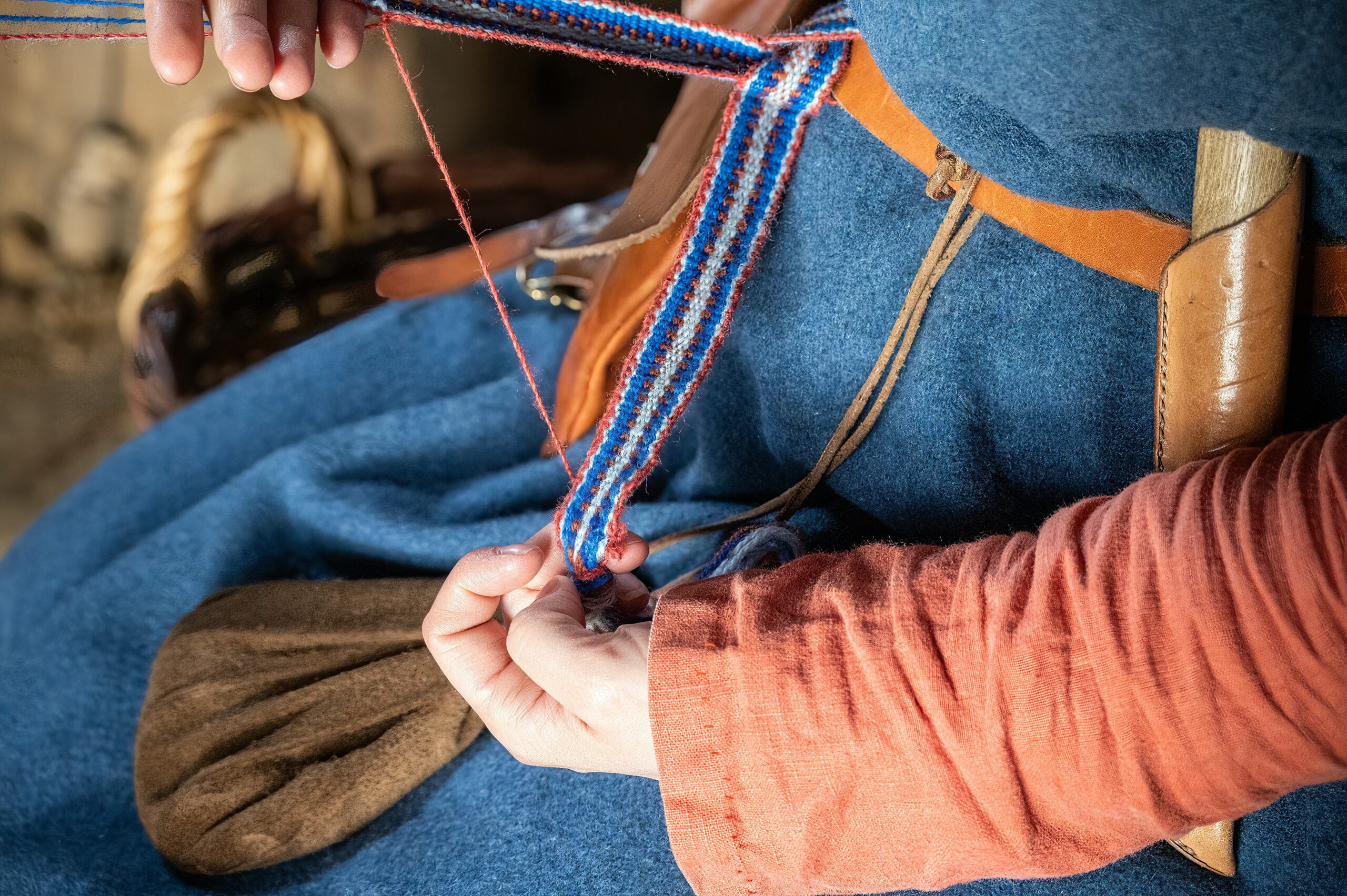
Threads of Time: The Viking Weaving Workshop Artifact Study
The quiet hum of anticipation filled Room One as the archaeologists and textile specialists gathered. Before them, meticulously arranged under soft lighting, lay the fruits of a recent excavation: a collection of artifacts unearthed from a Viking settlement, promising to shed light on the daily lives and skilled craftsmanship of its inhabitants. Among these treasures, a particular focus was placed on fragments of woven textiles, the silent storytellers of a bygone era. The Viking Weaving Workshop, a collaborative effort to meticulously study these finds, aimed to unravel the secrets held within their threads, offering an unprecedented glimpse into the techniques, materials, and aesthetic sensibilities of Viking weavers. This intensive study, housed within the dedicated confines of Room One, was not merely an academic exercise; it was a journey back in time, piecing together a vibrant tapestry of a society that thrived centuries ago. The meticulous examination of each fiber, each warp and weft, promised to reveal not just the practicalities of fabric production, but also the cultural significance and artistic expression embedded within these ancient creations.
The Viking weaving workshop room one artifact study provides fascinating insights into the textile practices of the Norse culture, highlighting the intricate techniques used in their craftsmanship. For those interested in exploring more about ancient engineering and its connection to historical artifacts, a related article titled “Unlocking the Secrets of Ancient Megalithic Engineering” can be found at this link: Unlocking the Secrets of Ancient Megalithic Engineering. This article delves into the remarkable engineering feats of ancient civilizations, offering a broader context for understanding the technological advancements of the time.
Unearthing the Past: Discoveries from Room One

The artifacts presented for study in Room One represented a significant archaeological find, offering a rare and remarkably well-preserved glimpse into Viking textile production. The excavation site, known for its rich organic preservation, had yielded a treasure trove of materials, and the weaving workshop collection was undoubtedly its crown jewel. The pieces, though fragmented, were in a condition that allowed for detailed analysis, a rarity in the study of ancient textiles, which are often subject to the ravages of time and decay.
The Context of the Find
The initial discovery was made during routine archaeological surveys preceding a construction project on the outskirts of a well-established Viking settlement. The site, believed to have been a significant hub of activity, revealed evidence of both domestic and craft-related structures. Within the remains of what appeared to be a longhouse or a dedicated workshop space, a concentration of textile fragments was identified. The soil conditions, characterized by a waterlogged, anaerobic environment, had played a crucial role in preserving these delicate organic materials. The fragments were found in association with other artifacts, including spindle whorls, weaving tools, and evidence of dyeing, strongly suggesting a dedicated space for textile production. This fortunate combination of preservation and contextual association provided an invaluable opportunity to study Viking weaving in situ and understand its place within the broader settlement.
Initial Assessment of the Textile Fragments
Upon their extraction, the textile fragments were carefully cataloged and transported to the secure environment of Room One. An initial visual inspection revealed a surprising diversity in weave structures, thread counts, and fiber types. Some fragments displayed intricate patterns, hinting at a level of sophistication in weaving far beyond simple utilitarian fabrics. Others were coarser, likely serving more practical purposes. The colors, though often faded, still hinted at a spectrum of natural dyes, from earthy browns and reds to subtle blues and greens. The sheer volume and variety of these fragments immediately underscored the importance of a dedicated study, one that would allow for a deep dive into the nuances of Viking textile arts. The presence of both fine and coarse weaves, alongside evidence of different dyeing techniques, suggested that the inhabitants of this settlement were engaged in a comprehensive approach to textile production, catering to a range of needs and aesthetic preferences.
Deconstructing the Threads: Methodologies and Observations

The Viking Weaving Workshop in Room One employed a multi-disciplinary approach, bringing together expertise in archaeology, textile conservation, and materials science. The goal was to move beyond simple identification and delve into the “how” and “why” of Viking textile production. This involved employing a range of scientific techniques alongside traditional close examination.
Fiber Analysis and Identification
A crucial first step involved the meticulous identification of the fibers used in the woven fragments. This was achieved through a combination of microscopic examination and, where necessary, more advanced techniques such as Fourier-transform infrared spectroscopy (FTIR). The dominant fiber identified was wool, sourced from sheep that were undoubtedly a common part of the Viking agricultural landscape. However, the study also revealed the presence of other fibers, including linen, derived from flax plants, and in rarer instances, evidence suggesting the use of animal hair beyond sheep’s wool, possibly from goats or even horses for coarser materials. The quality of the wool varied significantly, with some fragments exhibiting fine, tightly spun yarns indicative of high-quality fleece, while others were clearly made from coarser, less processed wool, likely used for more robust textiles. The identification of linen, a labor-intensive fiber to process, further demonstrated the range of materials available and utilized by the community.
Weave Structure and Loom Technology
The intricate tapestry of Viking weaving was brought to light through the detailed analysis of weave structures. The most prevalent weave identified was the plain weave (tabby), a fundamental and versatile technique. However, the study uncovered more complex structures, including twill weaves, particularly the diagonal twill (also known as the 2/2 twill), which offered greater durability and drape. Evidence of finer twills and even some patterned weaves, such as a simple diamond pattern achieved through interlacing warp and weft threads, was also observed. These findings provided direct insights into the types of looms used. The presence of predominantly plain and twill weaves strongly suggests the use of warp-weighted looms, a characteristic feature of Viking and earlier Germanic textile production. The tension control afforded by these looms would have been essential for creating the various weave structures and patterns observed. The subtle variations in thread count and weave density within different fragments also spoke to the weaver’s skill and the intended purpose of the fabric.
The Art of Dyeing and Coloration
The vibrant world of Viking coloration, though muted by time, was partially resurrected through the study of residual dyes. Pigment analysis, utilizing techniques like mass spectrometry, allowed for the identification of common natural dyes used during the Viking Age. Madder root was a prominent source for reds and oranges, while woad provided blues. Onion skins and weld were likely used for yellows and greens. The study revealed that the Vikings possessed a sophisticated understanding of plant-based dyeing, achieving a range of colors through various mordants and processes. The distribution of color across the fragments indicated both a desire for aesthetic appeal and the practical application of dyes, with some colors likely signifying status or specific uses. The presence of undyed, natural-colored wool and linen also highlighted a preference for understated, natural tones in certain contexts.
Beyond the Loom: Functional and Cultural Significance
The artifacts from Room One were not merely technical demonstrations of weaving skill; they were embedded within the social and cultural fabric of Viking society. Their study offered a window into how textiles were used, valued, and perceived.
Textiles in Daily Life
The sheer volume and variety of woven materials suggest that textiles played an integral role in every aspect of Viking daily life. Fragments of coarser weaves likely formed the basis of clothing, such as tunics and trousers, as well as household items like blankets and sails. Finer weaves, often with more complex patterns or richer dyes, might have been used for more prestigious garments, religious vestments, or ceremonial items. The study of wear patterns on certain fragments also provided clues about their function, indicating areas of stress that might correspond to seams or points of attachment. The presence of very fine, delicate fragments could even suggest the existence of specialized items, perhaps used for personal adornment or as offerings.
Symbolism and Status in Textiles
In a society where social hierarchy was clearly defined, textiles could serve as powerful indicators of status and wealth. The use of imported dyes, rare fibers, or intricate weaving techniques would have been markers of prestige. The study of patterned fragments, in particular, hinted at a developing aesthetic sensibility and the potential for symbolic representation. While deciphering specific meanings from abstract patterns can be challenging, it is plausible that certain motifs held cultural or religious significance, or simply served to distinguish individuals or groups. The distribution of finer, more elaborately decorated textiles within the settlement, if discoverable, could further illuminate this aspect of Viking social structure. The ability to produce and acquire such textiles would have been a tangible expression of one’s standing within the community.
Trade and Exchange of Textiles
The presence of different fiber types and dyeing materials, some of which may not have been locally sourced, points to the importance of trade and exchange in Viking textile production. The sourcing of specific dyes or high-quality wool could have involved long-distance networks, connecting the settlement to other regions. Understanding the origins of these materials through isotopic analysis or comparative studies of textile traditions in other Viking settlements could reveal crucial information about the economic and cultural connections of this community. The export of finished textiles, or the raw materials for their creation, could also have been a significant component of the Viking economy, further integrating them into a wider European trade system.
In exploring the intricacies of Viking weaving techniques, the recent study of artifacts from a workshop room has shed light on the materials and methods used by these skilled artisans. This fascinating research not only highlights the craftsmanship of the Vikings but also connects to broader themes of cultural preservation and asset protection. For those interested in understanding how historical practices can inform modern legal frameworks, an insightful article on the implications of the US National Emergency Powers Act can be found here. This connection underscores the importance of safeguarding both tangible heritage and contemporary assets.
Echoes of the Past: Reconstructing the Viking Weaver’s World
| Artifact ID | Type | Material | Dimensions (cm) | Condition | Estimated Age (Years) | Notes |
|---|---|---|---|---|---|---|
| VW-001 | Spindle Whorl | Stone | 4.5 x 4.5 x 1.2 | Good | 1100 | Decorated with spiral motifs |
| VW-002 | Bone Needle | Bone | 7.8 x 0.3 x 0.3 | Fair | 1050 | Tip slightly worn |
| VW-003 | Weaving Comb | Wood | 15 x 5 x 1.5 | Poor | 1150 | Fragmented, partial teeth missing |
| VW-004 | Textile Fragment | Linen | 12 x 10 | Good | 1100 | Patterned weave visible |
| VW-005 | Spindle Shaft | Wood | 20 x 1.2 | Good | 1080 | Smooth surface, slight curvature |
The findings from the Room One artifact study are not static pieces of evidence; they are dynamic keys that unlock a deeper understanding of the Viking weaver’s world. This research has tangible implications for how we visualize and interpret this period.
The Weaver’s Skill and Innovation
The meticulous craftsmanship evident in the woven fragments challenges any simplistic notions of Viking textile production as purely utilitarian. The study highlights the skill, patience, and artistic flair of Viking weavers, who were masters of their craft. The ability to manage complex loom setups, create intricate patterns, and achieve vibrant colors speaks to a deep knowledge passed down through generations. Furthermore, the presence of varied techniques suggests a willingness to experiment and innovate, adapting existing methods to new materials or aesthetic desires. The study offers a tangible connection to these skilled individuals, allowing us to appreciate their contributions to society beyond warfare and exploration.
Implications for Historical Interpretation
The data gleaned from the Room One weaving workshop has profound implications for how we interpret Viking history. It reinforces the importance of textiles as a primary industry, integral to both the economy and daily life. The study moves beyond the stereotypical image of the Viking warrior to reveal a society with a rich domestic and artisanal culture. Understanding the resources, techniques, and cultural significance of textiles allows for a more nuanced and complete picture of Viking civilization, emphasizing their role as skilled craftspeople and traders, as well as explorers. This research provides a counterpoint to the more commonly emphasized aspects of Viking society, offering a more balanced and comprehensive historical narrative.
Future Avenues of Research
The discoveries within Room One have opened up exciting new avenues for future research. The application of advanced analytical techniques, such as digital microscopy and archaeobotanical analysis of associated plant remains, could further refine our understanding of fiber sourcing and dyeing practices. Comparative studies with other Viking and contemporary textile assemblages from across Europe are crucial for contextualizing these findings within broader cultural trends. Furthermore, the potential for experimental archaeology, where modern weavers attempt to replicate Viking techniques using period-appropriate tools and materials, could offer invaluable insights into the practicalities and challenges faced by ancient weavers. The ongoing study of these fragments is a testament to the enduring power of archaeological investigation to continually reshape our understanding of the past.
Preserving the Legacy: Conservation and Future Access
The responsibility of studying these fragile artifacts extends beyond immediate analysis; it encompasses their long-term preservation and accessibility for future generations of researchers and the public.
Conservation Strategies and Challenges
The delicate nature of the ancient textile fragments presents significant conservation challenges. Exposure to light, humidity fluctuations, and even airborne pollutants can accelerate their decay. A comprehensive conservation plan was implemented in Room One, involving specialized environmental controls, meticulous handling protocols, and the application of appropriate conservation treatments where necessary. This might include gentle cleaning, stabilization of fragile areas, and the use of inert materials for storage and display. The ultimate goal is to halt or significantly slow down the degradation process, ensuring the long-term survival of these invaluable historical records. The inherent fragility of organic materials means that every step must be taken with extreme care to avoid causing irreparable damage.
Documentation and Digital Archiving
Thorough documentation is paramount for any archaeological study, and the weaving workshop artifacts are no exception. Detailed photographic records, precise measurements, and comprehensive written descriptions of each fragment have been compiled. Furthermore, a significant effort has been made to create a digital archive of all collected data. This includes high-resolution images, scanned research notes, and analytical results. This digital repository ensures that the information gathered is not lost and can be easily accessed and shared by researchers globally, fostering collaboration and enabling future comparative studies. The accessibility of this digital archive is a vital component in ensuring the long-term impact and usefulness of the research.
Public Engagement and Education
The insights gained from the Viking Weaving Workshop have the potential to resonate far beyond academic circles. Efforts are underway to translate these complex findings into engaging narratives for public consumption. This might involve exhibitions, educational programs, and accessible online resources that showcase the beauty and ingenuity of Viking textiles. By sharing these stories, the project aims to foster a greater appreciation for the artistry and skill of Viking craftspeople, humanizing a period often dominated by tales of conquest, and highlighting the vital role of everyday life and skilled labor in shaping this fascinating civilization. The ultimate aim is to ensure that the legacy of these ancient weavers is not only preserved but also celebrated and understood by a wider audience.

The Viking “Bison” Myth That Was Just Debunked
FAQs
What is the purpose of the Viking weaving workshop room artifact study?
The purpose of the Viking weaving workshop room artifact study is to analyze and understand the artifacts found in the room to gain insights into Viking weaving techniques, tools, and materials used during that time period.
What types of artifacts were discovered in the Viking weaving workshop room?
The artifacts discovered in the Viking weaving workshop room include looms, weaving tools such as needles and shuttles, textile fragments, and possibly dyes or other materials used in the weaving process.
How do the artifacts found in the Viking weaving workshop room provide information about Viking society?
The artifacts found in the Viking weaving workshop room provide information about Viking society by revealing the importance of textile production, the skills of Viking weavers, the types of textiles produced, and possibly the social status of the weavers.
What can the study of the artifacts from the Viking weaving workshop room tell us about Viking trade and connections with other cultures?
The study of the artifacts from the Viking weaving workshop room can provide insights into Viking trade networks, the exchange of textiles with other cultures, and the influence of foreign techniques or materials on Viking weaving practices.
How does the analysis of the artifacts from the Viking weaving workshop room contribute to our understanding of Viking daily life?
The analysis of the artifacts from the Viking weaving workshop room contributes to our understanding of Viking daily life by shedding light on the importance of textile production in daily activities, the division of labor within Viking society, and the role of textiles in economy and social interactions.