The Patience Game: Why Waiting is Your Best Tool
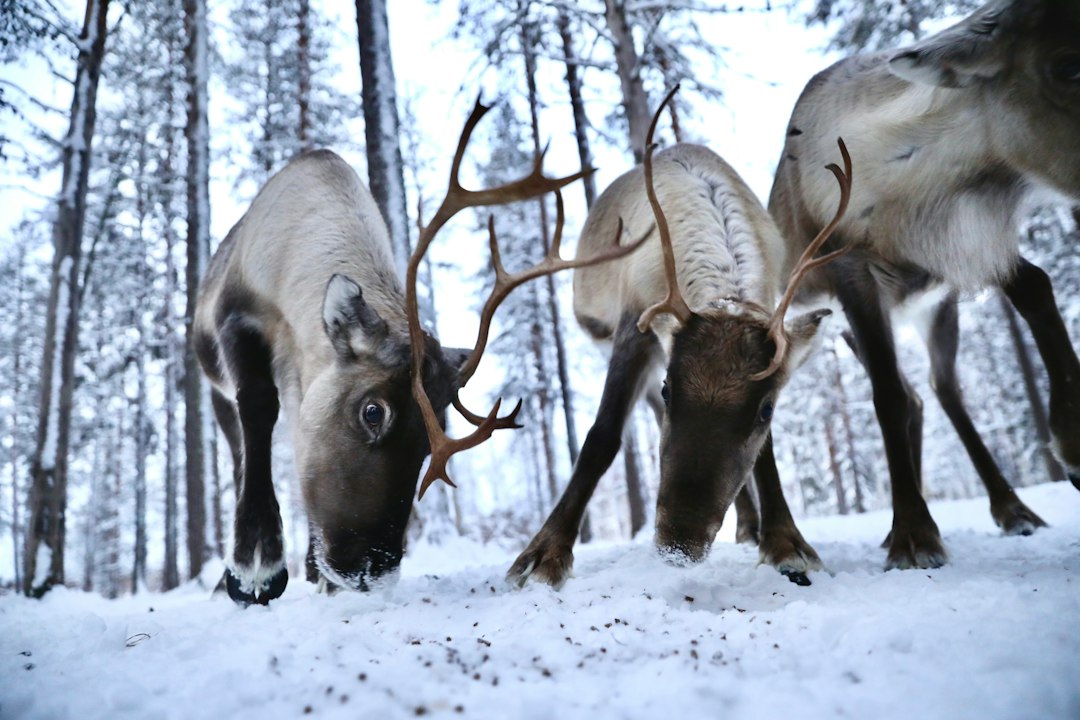
Thinking about hunting reindeer using only what nature provides? It sounds pretty hardcore, and honestly, it is. But the core of a lot of this kind of hunting isn’t about speed or strength, it’s about patience. If you’re looking to master primitive hunting skills, especially for something like reindeer, understanding the art of the ambush is paramount. It’s less about chasing and more about being in the right place at the right time, becoming a silent part of the landscape.
In exploring the fascinating world of primitive skills, the concept of waiting in a reindeer ambush highlights the importance of patience and strategy in hunting practices. This method not only requires an understanding of animal behavior but also the ability to utilize natural resources effectively. For those interested in maximizing their resource use, a related article discusses the innovative applications of in-situ resource utilization (ISRU) technology, which can enhance survival skills in various environments. You can read more about it in the article titled “Maximizing Resources with ISRU Technology” available at this link.
Understanding the Reindeer’s World

Reindeer aren’t just big, furry targets; they have their own routines, their own territories, and their own instincts. To hunt them primitively, you have to think like them, observe like them, and anticipate their movements. This isn’t a quick grab-and-go operation. It requires deep observation of their behavior, their environment, and the subtle signs they leave behind.
The Reindeer’s Daily Dance
Reindeer are creatures of habit, especially in their daily movements. They have preferred routes for reaching water sources, good grazing areas, and safe resting spots. These routes are often predictable, especially during certain seasons. Understanding these patterns is the first step to setting up an effective ambush. Think of it like knowing when your neighbor usually gets their mail – you don’t need to guess, you just need to know the schedule. For reindeer, this schedule is dictated by food, water, and avoiding predators.
Seasonal Shifts in Behavior
The landscape changes, and so do the reindeer. Migration patterns are a huge factor. In the Arctic, these migrations can be immense, following ancient paths dictated by seasonal availability of forage. A tactic that works in the summer might be useless in the winter. You need to be aware of where they are heading, why they are heading there, and how their movement might change based on snow depth, ice conditions, or the emergence of new vegetation. This is where historical and anthropological knowledge of Arctic lifeways becomes incredibly valuable – it gives you a framework for understanding these long-term movements.
Recognizing Their Tells
Every animal leaves clues. For reindeer, it’s tracks, droppings, and signs of them browsing on vegetation. But it’s also more subtle: the way they react to wind direction, their alertness to sounds, their tendency to group up for safety. Learning to read these “tells” is like learning a language. It’s not just about seeing a track; it’s about understanding how old it is, which direction it’s going, and what it tells you about the animal’s immediate needs or state of mind. This deep observational skill is at the heart of all primitive hunting.
The Art of the Silent Wait

Once you understand the reindeer and its environment, the next critical skill is the ambush. This is where patience truly becomes your greatest weapon. It’s not about adrenaline-fueled chases; it’s about calculated stillness and precise timing.
Choosing Your Spot Wisely
The perfect ambush spot is rarely random. You’re looking for choke points. These could be narrow passes between hills, the banks of a river crossing, or game trails that funnel animals into a specific area. Think about where a reindeer would naturally have to slow down, or where it would be most exposed. Often, these are also areas that offer you cover – thick brush, rocky outcrops, or natural depressions in the terrain. It’s a dual purpose: control the animal’s movement and conceal your own presence.
Building Your Hide
Your hide needs to blend seamlessly with the environment. This means using natural materials found in the immediate vicinity. If you’re in a forested area, use branches and leaves. In a rocky tundra, use stones and sparse vegetation. The goal is to break up your human silhouette and to avoid any unnatural shapes or colors that might alert the animal. Remember, reindeer have excellent eyesight, and they are highly attuned to anything that looks out of place. Think camouflage that is so effective, it essentially disappears.
The Long Watch
This is the part that separates the casual observer from the master hunter. Ambushes can last for hours, even days. You need to be prepared for prolonged periods of stillness, enduring the elements, and managing your own physical and mental state. This is where studying the patience of predators in nature, like wolves waiting for beavers, provides a real-world analogue. It’s about conserving energy, managing your thoughts, and maintaining focus without becoming restless. The modern interest in primal skills often includes teaching this mental fortitude – it’s as important as knowing how to make a fire.
Crafting Your Primitive Arsenal
While patience is key, you still need tools. In primitive hunting, these tools are crafted from natural materials, honed through skill and understanding of their properties.
The Spear and Javelin: Reach and Power
For larger game like reindeer, a well-made spear or javelin is essential. This isn’t just a sharpened stick. It requires selecting the right wood for strength and flexibility, carefully shaping the point, and possibly hardening it with fire. The weight and balance are crucial for accuracy. A javelin offers the advantage of distance, allowing you to strike from further away, minimizing your risk of detection. The goal is to deliver a lethal blow with minimal exertion on your part, ensuring the animal is incapacitated quickly.
The Bow and Arrow: Precision and Stealth
If you’re operating in a context where bows and arrows are feasible, they offer a different kind of advantage. A well-crafted bow, made from materials like yew or hickory, and arrows fletched with feathers and tipped with stone or bone points, can be incredibly effective. The advantage here is in stealth and the ability to make multiple shots if necessary, though the ethical aim is always a single, clean kill. Bow making itself is a complex skill, requiring an understanding of tension, flexibility, and aerodynamics. This is where the more general “primal skills” courses often start, as these are foundational.
Traps and Snares: The Subtle Approach
While not strictly an “ambush” in the sense of a direct confrontation, well-placed traps and snares can be an integral part of a primitive hunting strategy. These rely on understanding the animal’s movement patterns and their natural inclination to investigate certain areas or follow specific paths. Pitfall traps, camouflaged and placed on known game trails, can effectively immobilize an animal without direct confrontation. Snares, made from strong cordage, can be set at neck height on frequently used trails. These methods require immense patience in setting and checking, and a deep understanding of animal behavior to be effective and humane.
In the fascinating world of primitive skills, the art of waiting in a reindeer ambush showcases the intricate techniques used by ancient hunters to secure their sustenance. This method not only requires patience but also a deep understanding of animal behavior and the environment. For those interested in exploring more about historical navigation and survival strategies, a related article discusses the Piri Reis map and its implications on exploration, which can provide valuable insights into how early civilizations interacted with their surroundings. You can read more about it here.
Tracking and Recovery: The Hunt Continues
| Skill | Description | Estimated Time to Master | Success Rate (%) | Key Tools/Materials |
|---|---|---|---|---|
| Camouflage | Using natural materials to blend into the environment to avoid detection by reindeer. | 2 weeks | 75 | Leaves, mud, branches |
| Tracking | Identifying and following reindeer tracks to predict movement patterns. | 1 month | 80 | Observation skills, knowledge of terrain |
| Ambush Positioning | Selecting optimal hiding spots for waiting and capturing reindeer. | 3 weeks | 70 | Natural cover, terrain knowledge |
| Silent Movement | Moving quietly to avoid alerting reindeer during approach or retreat. | 2 weeks | 85 | Soft footwear, slow deliberate steps |
| Weapon Crafting | Making primitive weapons suitable for hunting reindeer. | 1 month | 65 | Wood, stone, bone |
| Patience & Endurance | Ability to wait for extended periods without movement or noise. | Ongoing | 90 | Mental focus, physical stamina |
The ambush is only part of the equation. If your shot isn’t immediately lethal, or if the animal is wounded, the tracking and recovery phase becomes critical. This is where your understanding of animal behavior and sign reading is put to its ultimate test.
Reading the Signs of the Trail
A wounded reindeer will behave differently than a healthy one. You need to look for signs of blood – its color, consistency, and how much is being shed. You’ll also look for changes in its gait, broken branches that are higher than usual, or signs of distress in its droppings. Every dropped leaf, every disturbed patch of moss can tell you a story about the animal’s condition and direction of travel. This is where micro-wear analysis on ancient bone tools from Arctic hunting camps becomes fascinating – it shows how precisely our ancestors were reading the subtle cues left behind.
Patience in Pursuit
Just like the ambush, recovery often requires immense patience. A wounded animal might try to hide or travel erratically. Rushing the pursuit can spook it further, making it harder to find and potentially leading to a lost animal. You need to move slowly, deliberately, and with constant observation. You’re not chasing; you’re following a fading story written on the land. It’s about maintaining a psychological advantage, assuming the animal is more tired and distressed than you are.
Respecting the Harvest
If you are successful, the recovery is also about respect for the animal. Understanding how to process a large animal like a reindeer in a primitive context is a skill in itself, ensuring you make the most of your harvest and honor the sacrifice. This involves butchering, preservation techniques, and utilizing every part of the animal.
In exploring the fascinating world of primitive skills, one intriguing technique is the art of waiting in a reindeer ambush, which showcases the deep connection between ancient hunting practices and survival strategies. This method not only requires patience and skill but also an understanding of animal behavior and environmental cues. For those interested in the broader implications of ancient societies and their challenges, a related article discusses the mysterious causes of the Bronze Age collapse, shedding light on how environmental factors and societal changes can impact survival. You can read more about it in this insightful piece on the topic here.
The Mindset of the Primitive Hunter
Beyond the physical skills, mastering primitive hunting, especially an ambush like this, is fundamentally about a shift in mindset. It’s about reconnecting with natural cycles and embracing a different way of interacting with the world.
Embracing Stillness
In our fast-paced modern world, stillness is a foreign concept. Primitive hunting demands it. It’s about learning to be present, to observe without judgment, and to find a sense of peace in the quiet observation of nature. This mental discipline is cultivated over time, through practice and a genuine desire to understand the natural world. It’s the opposite of the constant stimulation we’re used to.
Understanding Interdependence
This kind of hunting is not about domination, but about interdependence. You are a part of the ecosystem, taking what you need in a way that respects the larger balance. It’s about understanding that your survival is linked to the health of the environment and the populations within it. This perspective fosters a deep respect for the animal and the land, moving away from a purely exploitative view.
Continuous Learning
No one masters these skills overnight. Each hunt, each observation, each attempt is a learning experience. The “why” behind a reindeer’s behavior, the subtle shifts in wind patterns, the best way to craft a particular tool – these are all lessons to be absorbed. The anthropological and historical context of Arctic lifeways demonstrates that these skills were honed over millennia, passed down through generations of trial and error. This continuous learning, this humble approach to mastering the wild, is the true essence of primitive hunting.

Life 20,000 Years Ago | When Your Ice Age Family Can’t Feed the Dog
FAQs
What is a reindeer ambush in the context of primitive skills?
A reindeer ambush refers to a traditional hunting technique used by indigenous peoples to capture reindeer. This method involves strategically positioning oneself in an area where reindeer are known to travel, often using natural cover to remain hidden while waiting for the animals to come within range for a successful hunt.
What primitive skills are necessary for successfully waiting in a reindeer ambush?
Successful waiting in a reindeer ambush requires several primitive skills, including tracking, camouflage, patience, and knowledge of reindeer behavior. Hunters must be able to identify signs of reindeer activity, blend into their surroundings, and remain still for extended periods to avoid detection.
What tools or equipment are typically used in a reindeer ambush?
In a reindeer ambush, hunters may use tools such as bows and arrows, spears, or traps. Additionally, they might employ natural materials for camouflage, such as branches, leaves, or animal hides, to conceal themselves from the reindeer while waiting for the right moment to strike.
How does the environment affect the success of a reindeer ambush?
The environment plays a crucial role in the success of a reindeer ambush. Factors such as terrain, weather conditions, and the availability of natural cover can significantly impact visibility and the movement patterns of reindeer. Hunters must choose locations that maximize their chances of encountering reindeer while minimizing their own visibility.
What cultural significance does reindeer hunting hold for indigenous peoples?
Reindeer hunting holds significant cultural importance for many indigenous peoples, particularly in Arctic and sub-Arctic regions. It is not only a source of food but also a vital part of their cultural identity, traditions, and social practices. The skills and knowledge passed down through generations regarding reindeer hunting are integral to their way of life and survival.