The dusty plains of American folklore are rife with legends, and few loom larger than that of Jesse James. For decades, the accepted narrative has been that the notorious outlaw met his end on April 3, 1882, gunned down by the very man he trusted, Robert Ford, in St. Joseph, Missouri. The tale is dramatic, fitting for the man who robbed trains and banks with a flair for the theatrical. However, as with many enduring myths, a persistent whisper of doubt has echoed through time, questioning the official account. Was Jesse James truly assassinated in 1882, or did the legend of his demise serve as a convenient cloak for a deeper, more complex reality? This exploration delves into the evidence, the controversies, and the enduring mystery surrounding the death of one of America’s most infamous figures.
The Official Account and Its Unraveling
The story of Jesse James’s death, as perpetuated for over a century, hinges on the betrayal by Robert Ford, a member of James’s own gang. Driven by a desire for the substantial reward money offered for Jesse’s capture, dead or alive, Ford, along with his brother Charles, planned and executed the assassination. The official record paints a picture of Jesse, hot and bothered after a dusty day, removing his pistol and stepping onto a chair to dust a picture on the wall. It was at this vulnerable moment that Robert Ford, with calculated precision, fired a fatal shot into the back of Jesse’s head. The ensuing chaos and the swift identification of the body, supposedly Jesse’s, solidified the narrative.
The Corpse in St. Joseph
The body displayed to the public in St. Joseph was indeed identified as Jesse James. It was even subjected to a hasty autopsy and buried. Photographs of the purported corpse quickly circulated, further cementing the belief in his death. However, even in the immediate aftermath, anomalies began to surface. The bullet purportedly recovered from the skull was a caliber that James was not known to carry. Furthermore, the facial features in the photographs, while bearing some resemblance, were also noted by some as slightly different from known images of Jesse. These discrepancies, though often dismissed as poor photography or the ravages of death, planted the first seeds of doubt.
The Allure of the Reward
The substantial reward offered by the governor of Missouri for Jesse James’s apprehension was a powerful motivator. For Robert and Charles Ford, it represented not only a fortune but also a potential escape from their precarious lives as outlaws. The promise of $10,000 dead or alive was a significant sum in the late 19th century, a sum that could buy freedom, security, and a fresh start. This immense financial incentive cannot be overstated when considering the actions of the Ford brothers. It provided a compelling reason for them to bring Jesse down, regardless of the cost.
The intriguing question of whether Jesse James was truly assassinated in 1882 continues to captivate historians and enthusiasts alike, sparking debates about the authenticity of his death and the legacy he left behind. For those interested in exploring related topics, an article discussing the booming manufacturing sector in Tijuana provides a fascinating contrast to the historical narratives of outlaws and their impact on society. You can read more about this modern development in the context of economic growth and its implications by visiting this link: Tijuana’s Manufacturing Sector Booms.
Whispers of Survival: The Claims of an Imposter
As the years turned into decades, the official story began to fray at the edges, challenged by individuals who claimed to be Jesse James, or knew him to be alive. These claims, often appearing decades after the supposed assassination, added layers of intrigue and fueled the debate. The idea that Jesse James might have faked his own death became a tantalizing prospect, appealing to the romanticism of the outlaw who defied convention even in his demise.
The “Genuine Jesse” Appears
Perhaps the most persistent and well-known claimant was a man named J. Frank Dalton, who, in his later years, asserted that he was, in fact, Jesse James. Dalton presented himself as the legendary outlaw, living out his final days in Oklahoma. His stories, filled with vivid details of his outlaw exploits, resonated with many who were already questioning the official narrative. He claimed that the body in St. Joseph was that of a look-alike, a confederate who had agreed to impersonate him to collect the bounty. Dalton’s claims, though often met with skepticism by historical authorities, garnered a significant following and kept the “Jesse is alive” theory in the public consciousness.
The “King of the Outlaws” and the Desire for a New Life
The notion that Jesse James would want to escape his life of violence and pursuit is not far-fetched. The constant threat of capture, the betrayal within his own ranks, and the growing notoriety must have taken a toll. A carefully orchestrated disappearance could have offered him the peace and anonymity he desperately craved. The survival narrative suggests that Jesse, weary of his outlaw existence, orchestrated his own death, allowing the Ford brothers to collect the bounty while he slipped away to live a quiet, unheralded life. This would have required a level of cunning and foresight that was certainly within James’s capabilities.
The Forensic and Historical Puzzles

Beyond the claims of imposters, a closer examination of the evidence, or lack thereof, has unearthed further inconsistencies that lend credence to the idea that the St. Joseph corpse was not Jesse James. Forensic analysis, though limited by the technology of the era, has been revisited and reinterpreted, revealing crucial details that were overlooked or downplayed in the initial proceedings.
The Skull Evidence Revisited
One of the most compelling pieces of evidence against the official account centers on the skull attributed to Jesse James. Modern forensic analysis, including dental records and skeletal structure, has been used to compare the skull with known information about Jesse James. Some researchers have pointed to discrepancies in the cranial sutures and the overall shape of the skull that do not align perfectly with existing images and descriptions of James. While definitive proof is elusive, these subtle differences raise questions about the authenticity of the remains.
The Missing Pieces of the Puzzle
The hasty burial and the limited forensic investigation surrounding the death in St. Joseph have left many critical questions unanswered. There is a surprising lack of definitive documentation regarding the identification process. Furthermore, the absence of a detailed autopsy report that specifically details the cause of death and the trajectory of the bullet, beyond the basic findings, is notable. In a case involving such a high-profile fugitive, one would expect a more rigorous and thorough examination. This perceived lack of diligence has allowed room for speculation and the persistent belief that the scene was orchestrated to present a convenient truth.
The Ford Brothers’ Confession and Its Ambiguities
The Ford brothers, Robert and Charles, were instrumental in the official narrative of Jesse’s death. Their confession, and their subsequent actions, are central to the accepted story. However, even their accounts are not without their own complexities and potential motivations that could have influenced their testimonies.
The Reward and the Pardon
Upon confessing to the murder, the Ford brothers were apprehended, but their immediate release and subsequent pardon, in exchange for their cooperation, immediately raised eyebrows. While such leniency was not unheard of for informants, the swiftness of their freedom in such a sensational case fueled suspicion. Did they truly believe they were bringing an end to Jesse James, or were they complicit in a larger deception, their “confession” a necessary part of a pre-arranged plan to allow Jesse to disappear? The financial reward was undoubtedly a primary driver, but the offer of a pardon provided an additional layer of incentive for them to play their assigned roles.
The Shifting Sands of Testimony
While the Ford brothers maintained their account of the assassination, there were subtle inconsistencies in their testimonies over time. The pressure of public scrutiny, the passage of years, and perhaps even guilt or remorse could have led to slight alterations in their recollections. These minor discrepancies, though often dismissed by authorities as the natural fading of memory, have been seized upon by doubters as further evidence that the narrative of the murder might not be as straightforward as presented. The possibility that their stories were crafted to align with the desired outcome, rather than an unvarnished truth, remains a potent point of contention.
The mysterious circumstances surrounding the death of Jesse James in 1882 have long captivated historians and enthusiasts alike, leading to various theories about whether he was truly assassinated or if he faked his own death. For those interested in exploring more about historical events that shaped the American landscape, a fascinating read can be found in an article discussing the complexities of trade agreements and their impact on labor, which can be accessed here: understanding the USMCA labor value content. This connection highlights how historical narratives often intertwine with economic factors, providing a broader context for understanding figures like Jesse James.
The Enduring Legacy and Unanswered Questions
| Metric | Data/Information |
|---|---|
| Event | Death of Jesse James |
| Date | April 3, 1882 |
| Location | St. Joseph, Missouri |
| Cause of Death | Gunshot wound to the back of the head |
| Assassin | Robert Ford |
| Historical Consensus | Jesse James was assassinated in 1882 by Robert Ford |
| Controversies | Some conspiracy theories suggest Jesse James faked his death, but no credible evidence supports this |
| Verification | Death certificate and contemporary newspaper reports confirm assassination |
Regardless of whether Jesse James met his end in St. Joseph in 1882 or lived to see another day, his legend is firmly etched in the American psyche. The ambiguity surrounding his death has, in many ways, only enhanced his mystique, transforming him from a mere outlaw into a figure of enduring folklore. The persistent questions serve as a reminder that truth, especially when intertwined with myth and legend, can be a slippery and elusive commodity.
The Outlaw as a Symbol
Jesse James has become a potent symbol in American culture, representing rebellion, defiance, and a rejection of authority. His story taps into a deep-seated fascination with individuals who operate outside the established order. Whether he was a cold-blooded killer or a misunderstood folk hero, his image continues to resonate, fueled by the very uncertainty of his final moments. The ongoing debate about his death is not just an academic exercise; it speaks to our desire for closure, for definitive answers, and perhaps, to a romanticized view of an era and its larger-than-life characters.
The Persistence of Doubt
The enduring doubt surrounding Jesse James’s assassination is a testament to the power of speculation and the human inclination to question the official narrative when presented with even the slightest inconsistency. The lack of absolute, irrefutable proof – a DNA match that would have been impossible at the time, or a perfectly preserved, unambiguous historical record – allows the “what if” to persist. The legend of Jesse James is not solely defined by his crimes, but also by the enduring mystery of his disappearance, a mystery that continues to capture the imagination and defy easy answers, leaving the question of whether Jesse James really died in 1882 forever open to interpretation.
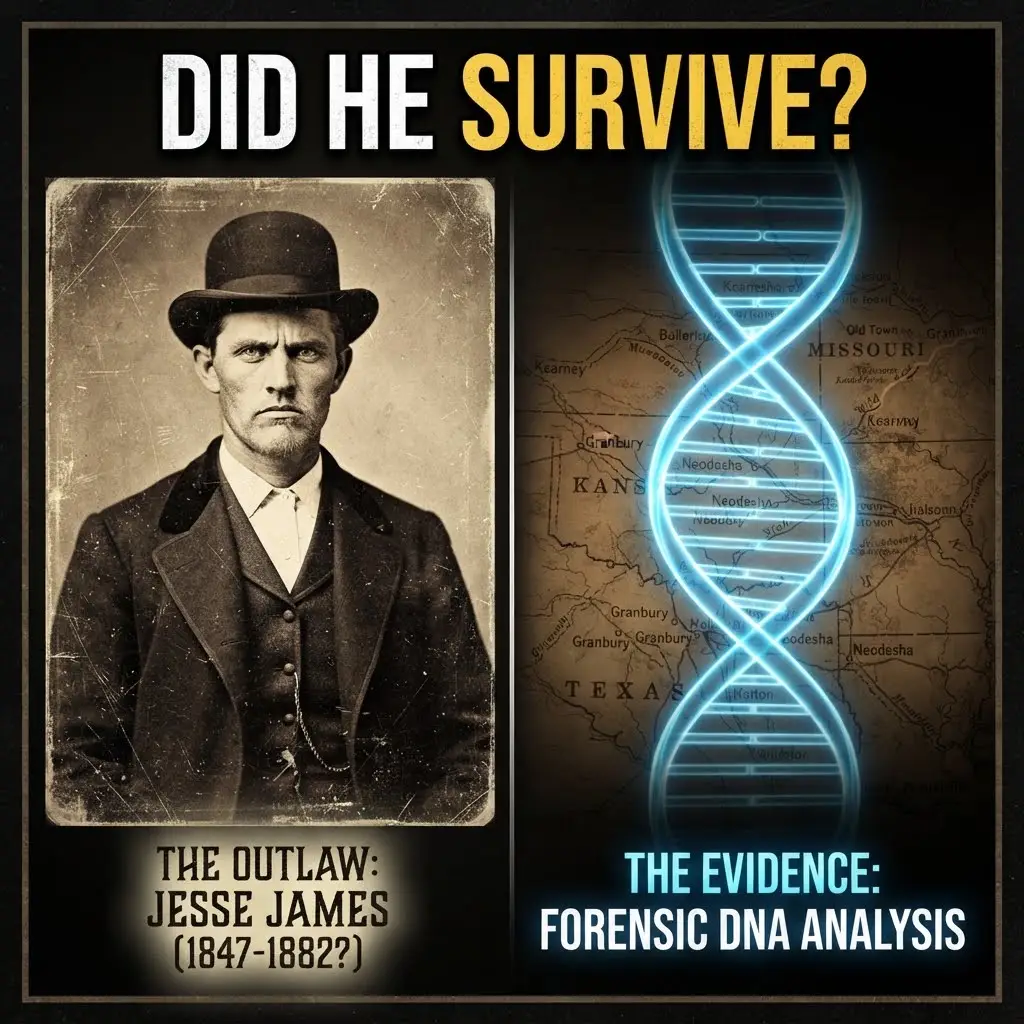
The Jesse James DNA Myth: Why Are There 3 Graves?
FAQs
1. Was Jesse James really assassinated in 1882?
Yes, Jesse James was assassinated on April 3, 1882, by Robert Ford, a member of his own gang. Ford shot James in the back of the head while James was adjusting a picture on the wall in his home.
2. Why was Jesse James targeted for assassination?
Jesse James was targeted for assassination because Robert Ford and his brother Charley Ford had made a deal with Missouri Governor Thomas T. Crittenden to capture or kill James in exchange for a pardon and reward money.
3. What was the aftermath of Jesse James’ assassination?
After Jesse James’ assassination, Robert Ford was charged with murder but later pardoned by Governor Crittenden. Ford’s actions were met with mixed reactions, with some viewing him as a cowardly traitor and others as a hero for bringing down a notorious outlaw.
4. How did the assassination of Jesse James impact his legacy?
The assassination of Jesse James solidified his status as a legendary figure in American history and folklore. His death added to the mystique surrounding his life as an infamous outlaw and contributed to the romanticized image of the Wild West.
5. Are there any conspiracy theories surrounding Jesse James’ assassination?
There have been conspiracy theories suggesting that Jesse James faked his own death and lived under an assumed identity for years after 1882. However, most historians and experts agree that James was indeed killed by Robert Ford in 1882.