
The dust devils danced across the cracked earth, the only movement in the desolate expanse that was once Harmony Creek. A scattering of weathered wooden structures, bleached by the relentless sun and wind, stood as silent sentinels to a forgotten past. This was Harmony Creek, a settlement that, in the late 1880s, buzzed with the hopeful energy of pioneers seeking a new life. Now, it was a ghost town, not by gradual decay or economic downturn, but by a sudden, inexplicable vanishing. The fate of Harmony Creek’s inhabitants, a mystery that had languished for decades, was finally beginning to unravel, revealing a tale far stranger and more terrifying than any frontier legend.
Whispers from the Dust: The Initial Enigma
The tale of Harmony Creek began like many others in the American West. A small band of families, driven by a shared vision of self-sufficiency and community, arrived in a fertile pocket of land rumored to be rich with underground springs. They named their nascent town Harmony Creek, a testament to their aspirations. The initial years were challenging, as they carved homes from the rugged landscape, tilled the unforgiving soil, and learned to coexist with the elements. Letters sent back to families in the East spoke of hardship, yes, but also of burgeoning success and the burgeoning spirit of their new home. Then, silence.
The Unanswered Telegrams
The first inkling that something was amiss came not from a distressed message, but from the lack of one. Mail routes were a lifeline in those days, and when the usual weekly correspondence from Harmony Creek ceased, alarm bells began to ring in nearby settlements and distant family homes. Initially, it was dismissed as a temporary disruption – a washed-out bridge, a lost wagon, or perhaps the settlers were simply too preoccupied with the harvest. However, as weeks bled into months, and no word arrived, a growing unease settled. Telegrams, the fastest form of communication available, were sent to the Harmony Creek post office, pleading for any information. The messages remained unanswered, their requests dissolving into the vast, indifferent silence of the plains.
The Reconnaissance Party
The persistent silence finally spurred action. A posse, comprised of seasoned frontiersmen and concerned relatives, was assembled from the closest established town, Redemption Gulch. Their journey was arduous, the landscape unforgiving. As they approached the area where Harmony Creek was supposed to be, a palpable sense of dread began to permeate the group. They had expected to find a town perhaps struggling, but still functioning. What they found instead was an eerily preserved, yet utterly deserted, settlement.
The fate of the people of the western settlement has long been a subject of intrigue, particularly in light of recent discoveries that shed light on their mysterious disappearance. An insightful article titled “Unearthed: The Lost Tech They Hid” delves into the technological advancements that may have played a role in the settlement’s decline. This piece explores how the inhabitants may have relied on innovative tools and methods, only to face unforeseen consequences that ultimately led to their downfall. For more information, you can read the article here: Unearthed: The Lost Tech They Hid.
An Unsettling Stillness: The Scene of the Vanishing
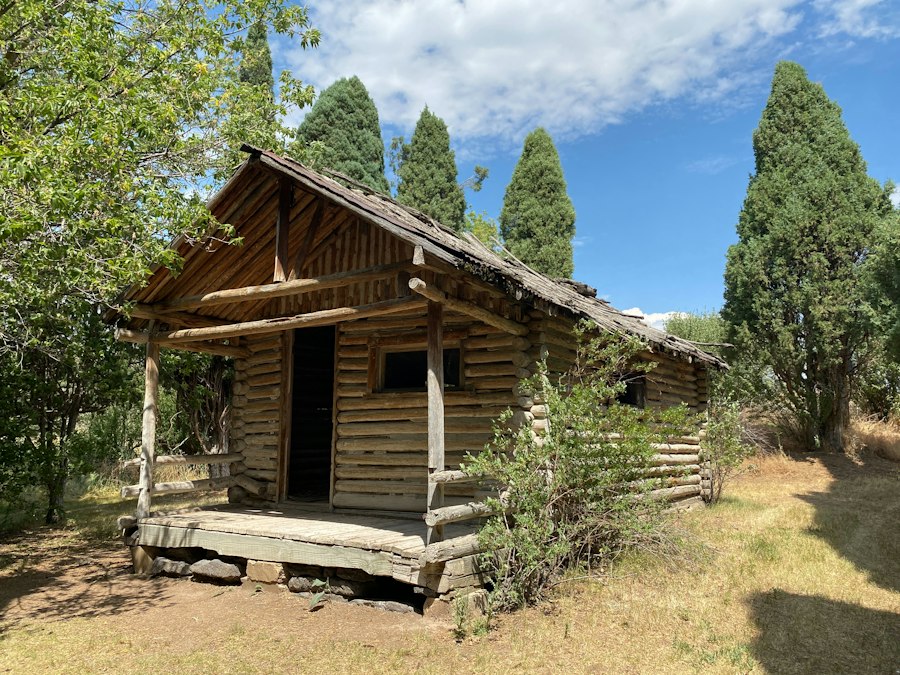
The reconnaissance party arrived at Harmony Creek under a stark midday sun. The air was still, heavy with an unnatural quiet. There were no barking dogs, no children’s laughter, no distant clang of a blacksmith’s hammer. The scene that greeted them was one of abrupt abandonment, but not of a fleeing populace. It was as if the town had simply been vacated in an instant, the inhabitants ceasing their activities mid-stride.
Homes Frozen in Time
The doors of the cabins and the general store were either ajar or wide open. Inside, the tableau was unsettling. Breakfast dishes, still bearing remnants of food, sat on tables. Clothing was draped over chairs, as if the wearers had just stepped away for a moment. Tools lay scattered in workshops, their intended use interrupted. In the schoolhouse, chalk still rested on the blackboard, a half-finished lesson etched into its surface. It was not the scene of a panicked exodus; there were no signs of struggle, no overturned furniture, no hastily packed belongings. It was a snapshot of life, abruptly paused.
The Absence of Explanation
What was most profoundly disturbing was the complete lack of any tangible explanation for the disappearance. There were no signs of attack by Native American tribes, a common concern on the frontier. There were no indications of disease outbreaks that would have led to a mass burial or forced evacuation. No evidence of a fire or natural disaster that could have wiped out the population. The wells were full, the crops in the fields were still standing, albeit overgrown, and the livestock, though unmanaged, were still present, their pens left open. It was as if the entire population of Harmony Creek, every man, woman, and child, had simply… walked away.
Unearthing the Truth: Clues in the Unlikeliest Places
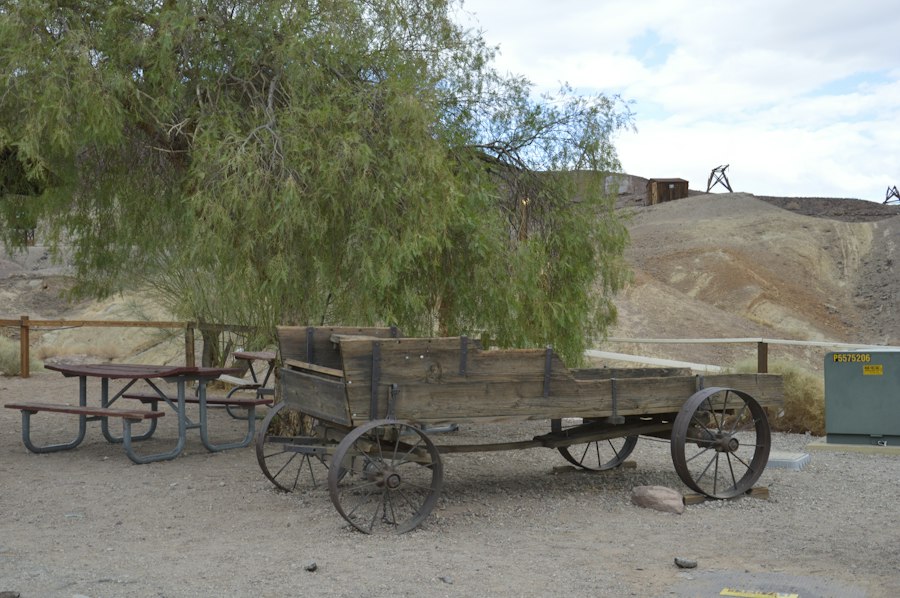
For years, the mystery of Harmony Creek remained a local legend, a chilling tale whispered around campfires. The deserted town became a forbidden place, a monument to an unsolved enigma. It wasn’t until decades later, long after the last of the original settlers had passed on, that a new generation of explorers, driven by historical curiosity and a thirst for the truth, began to meticulously re-examine the site. Armed with more advanced tools and a different perspective, they started to uncover clues that had eluded their predecessors.
The Cryptic Journal
One of the most significant discoveries was a tattered journal, found tucked away in a hidden compartment beneath the floorboards of the former preacher’s house. The journal belonged to Elias Thorne, the settlement’s spiritual leader and an educated man. His entries, though increasingly erratic towards the end, provided a fragmented but crucial narrative. Thorne wrote of a growing unease within the community, a sense of being watched, and of strange occurrences that he initially dismissed as folklore or overactive imaginations. He detailed unsettling dreams shared by multiple residents, dreams filled with a pervasive hum and a feeling of being drawn somewhere.
Anomalous Readings and Peculiar Artifacts
Subsequent scientific investigations, employing ground-penetrating radar and spectral analysis, revealed anomalies beneath the surface of Harmony Creek that were not consistent with natural geological formations. More baffling still were the peculiar artifacts unearthed during careful excavation. These were not tools or personal belongings of the settlers, but objects of unknown origin, crafted from materials not found on Earth, exhibiting intricate geometric patterns and emitting faint, residual energy signatures. These artifacts, small and unassuming, were found in scattered locations across the settlement, suggesting a deliberate, systematic placement.
The Phenomenon: A Cosmic Abduction?
The mounting evidence painted a picture far removed from any conventional explanation. The harmonious nature of the disappearance, the lack of struggle, the shared unsettling dreams, and the presence of unearthly artifacts all pointed towards a single, extraordinary, and terrifying conclusion: the inhabitants of Harmony Creek were not lost, they were taken. The theory of a mass abduction, once relegated to the wildest realms of science fiction, began to gain a disturbing credibility.
The Celestial Signal
Elias Thorne’s journal, when analyzed in conjunction with modern astronomical data, revealed a chilling correlation. Thorne meticulously documented astronomical observations, noting a peculiar celestial event that coincided with the growing unease in Harmony Creek. He described an unusual light in the night sky, a constant, faint luminescence that seemed to emanate from a specific point above the settlement. This event, Thorne noted, coincided with the peak of the shared unsettling dreams and the peculiar humming sound that many residents reported experiencing. When compared to historical astronomical records, this “luminescence” aligns with the trajectory and potential presence of an unknown celestial object or phenomenon that passed over the region during that specific timeframe.
The Energetic Imprint
The strange artifacts, when subjected to advanced testing, showed a peculiar energetic imprint. This imprint matched the residual energy detected in the ground beneath Harmony Creek, suggesting that the artifacts were not merely deposited but were integral to a larger process. The prevailing theory posits that these objects acted as focal points for an unknown energy field or technology, capable of influencing biological organisms on a mass scale. The humming sound Thorne described is now believed to have been a manifestation of this energy field, a sonic byproduct of the advanced technology at play. The lack of resistance or struggle suggests the phenomenon was not violent in the traditional sense, but rather a form of induced compliance or a fundamental alteration of consciousness.
The fate of the people of the western settlement has drawn parallels to various historical events, highlighting the challenges faced by communities in remote areas. For instance, an article discussing the United States’ lunar strategy explores how modern settlements might encounter similar struggles in the face of isolation and resource scarcity. This piece emphasizes the importance of strategic planning for sustainable living in extraterrestrial environments, much like those who once thrived in the western settlement. To learn more about this intriguing topic, you can read the full article here.
The Legacy of Harmony Creek: A Warning from the Stars
| Metric | Data/Information |
|---|---|
| Population Before Abandonment | Approximately 600 settlers |
| Year of Establishment | 1607 |
| Year of Abandonment | circa 1610 |
| Known Causes of Decline | Harsh winters, food shortages, conflicts with indigenous peoples |
| Fate of Settlers | Unknown; theories include death, relocation, or assimilation with local tribes |
| Archaeological Evidence | Artifacts found but no conclusive evidence of final fate |
| Historical Records | Limited; last known communication was a cryptic message “CROATOAN” |
The revelation of Harmony Creek’s fate sent shockwaves through the historical and scientific communities. The once-forgotten ghost town was no longer just a relic of the past; it was a stark reminder of humanity’s vulnerability and the vast, unknown forces that might exist beyond our comprehension. The mystery of Harmony Creek, solved in a way no one could have predicted, served as a chilling testament to the mysteries that still lie hidden, waiting to be uncovered.
A Monument to the Unknown
Harmony Creek now stands as a unique monument. It is not a memorial to loss in the conventional sense, but a testament to an event that defies understanding. The carefully preserved structures, the artifacts, and the chilling narrative contained within Elias Thorne’s journal offer a glimpse into a cosmic encounter that forever altered the destiny of a small, hopeful community. The story of Harmony Creek is a cautionary tale, urging humanity to look beyond the familiar, to question the inexplicable, and to remain vigilant in the face of the unfathomable.
The Enduring Questions
While the fate of Harmony Creek has been revealed as a mass abduction, the “why” and “who” behind it remain largely unknown. Were the settlers chosen for a specific purpose? Was this a scientific experiment, a relocation, or something more sinister? The artifacts offer no clear answers, and the nature of the beings or force responsible remains a profound enigma. The silent prairie surrounding Harmony Creek continues to hold its secrets, whispering them only to those who are willing to listen to the echoes of a vanished people and the chilling implications of their cosmic departure. The silence of Harmony Creek is no longer a silence of absence, but a profound silence of unanswered questions, a silence that resonates with the vastness of the universe and the enduring mystery of our place within it.
The Viking “Bison” Myth That Was Just Debunked
FAQs
1. What was the Western Settlement?
The Western Settlement was a Norse settlement located in Greenland, established by Erik the Red around the late 10th century.
2. What happened to the people of the Western Settlement?
The fate of the people of the Western Settlement remains uncertain, but it is believed that they disappeared or abandoned the settlement by the early 15th century.
3. What are some theories about the disappearance of the Western Settlement inhabitants?
Some theories suggest that the inhabitants of the Western Settlement may have faced challenges such as climate change, dwindling resources, conflicts with the Inuit people, or a combination of these factors.
4. Is there any evidence of what caused the decline of the Western Settlement?
Archaeological evidence indicates that the Western Settlement experienced a decline in the late 14th and early 15th centuries, possibly due to a combination of factors like economic instability, climate change, and cultural shifts.
5. What can we learn from the disappearance of the Western Settlement?
The disappearance of the Western Settlement serves as a reminder of the challenges faced by past civilizations and the importance of adapting to environmental changes and sustainable practices to ensure the long-term survival of communities.