
The stark, unyielding beauty of White Sands National Park, typically envisioned as a sprawling expanse of sun-baked gypsum dunes, transforms into an entirely different spectacle under the crushing embrace of an Ice Age. Imagine not the shimmering heat haze of a modern desert, but the biting wind whipping across a frozen landscape, where the familiar alabaster sands are dusted with snow and ice, creating a scene of ethereal, haunting grandeur. This was the reality for White Sands during glacial periods, a time when the world was a dramatically altered place, and this seemingly arid region was a testament to the pervasive reach of ice.
During the Pleistocene epoch, commonly known as the Ice Age, massive ice sheets covered significant portions of North America, reshaping continents and profoundly influencing climatic conditions far beyond their immediate reach. While the iconic ice sheets of Canada and the northern United States did not directly inundate the area now known as White Sands, their immense presence exerted a powerful indirect influence. The frigid air masses emanating from these continental glaciers drastically lowered global temperatures, creating a much colder and, importantly, a much wetter climate in the southwestern United States.
Shifting Climates: A World Transformed
The Pleistocene was not a monolithic era of perpetual ice. It was characterized by cycles of glacial advance (cold periods) and interglacial retreat (warmer periods). During the glacial maxima, when ice sheets were at their peak extent, the world experienced a significant drawdown of atmospheric moisture as water was locked up in ice. This paradoxically led to a “pluvial” period in many arid and semi-arid regions, including the American Southwest. “Pluvial” is derived from the Latin word for rain, and these periods were marked by increased precipitation and the formation of large, inland lakes where now only dry basins exist.
The Moisture Paradox: More Water in a Colder World
The prevailing misconception is that colder eras are always drier. However, during the Ice Age, the expansion of ice sheets fundamentally altered atmospheric circulation patterns. Global winds shifted, and vast amounts of moisture, which might have otherwise fallen as rain or snow in more temperate latitudes, were instead carried towards warmer, lower-latitude regions that were still subject to frigid influences. This resulted in significantly increased rainfall and snowfall across much of the southwestern United States.
During the Ice Age, the landscape of what is now White Sands, New Mexico, was dramatically different, featuring vast lakes and lush vegetation that supported a variety of wildlife. This unique environment has intrigued researchers and historians alike, leading to discoveries that shed light on the region’s prehistoric past. For a fascinating exploration of historical maps and their significance, you can read about the Piri Reis map and its implications for our understanding of ancient geography in this article: US Military Confirms Authenticity of Piri Reis Map.
The Genesis of the Frozen Dunes: Gypsum and Glacier
The unique geological composition of White Sands, its vast deposits of finely ground gypsum, played a crucial role in how this landscape responded to Ice Age conditions. The Tularosa Basin, where White Sands is located, is a closed basin, meaning water that enters it has no outlet to the sea. This characteristic is fundamental to the formation of both its modern desert and its ancient glacial landscape.
The Sorrel of the Earth: Gypsum’s Role
Gypsum, a soft sulfate mineral composed of calcium sulfate dihydrate (CaSO₄·2H₂O), is the primary constituent of the White Sands dunes. Its origins in this region are tied to ancient seas that once covered the Tularosa Basin. Over millions of years, these seas evaporated, leaving behind vast evaporite deposits, including gypsum. The relentless erosion of surrounding mountains, particularly the San Andres Mountains to the west and the Sacramento Mountains to the east, has been breaking down these gypsum layers, grinding them into the fine powder that forms the dunes.
The Great Lakes of the Southwest: Pluvial Lakes Emerge
During the Ice Age, the increased precipitation fueled the formation of extensive pluvial lakes throughout the Southwest. The Tularosa Basin became home to one of these significant bodies of water, often referred to as Lake Tularosa or a related precursor lake system. This lake was not a mere puddle; it was a substantial freshwater body, fed by rivers and streams draining the surrounding mountains. The water within these lakes contained dissolved minerals, including gypsum, leached from the surrounding land.
During the Ice Age, the landscape of what is now White Sands was dramatically different, featuring vast expanses of ice and unique geological formations. This period not only shaped the environment but also influenced the flora and fauna that thrived in the region. For those interested in understanding how such natural phenomena can impact our lives today, a related article discusses the importance of safeguarding assets during economic uncertainties. You can read more about it here.
The Unfolding of the Dunes: From Lakebed to Frozen Shore
As the pluvial lakes ebbed and flowed with the fluctuating glacial and interglacial cycles, they left behind vast, exposed lakebeds. These lakebeds were composed of fine gypsum sediment. During the glacial periods, when temperatures plummeted, these exposed sediments were subjected to freezing and thawing cycles. When the temperatures dropped below freezing, the moisture within the gypsum sediment would freeze, forming ice. Wind, which is always a significant force in desert environments, would then pick up this frozen, powdery gypsum and deposit it, much like snow. The result was the formation of dunes, but dunes composed of frozen, ice-laden gypsum, creating a surreal, snow-dusted landscape.
A Frozen Wonderland: The Visual Spectacle of Ice Age White Sands
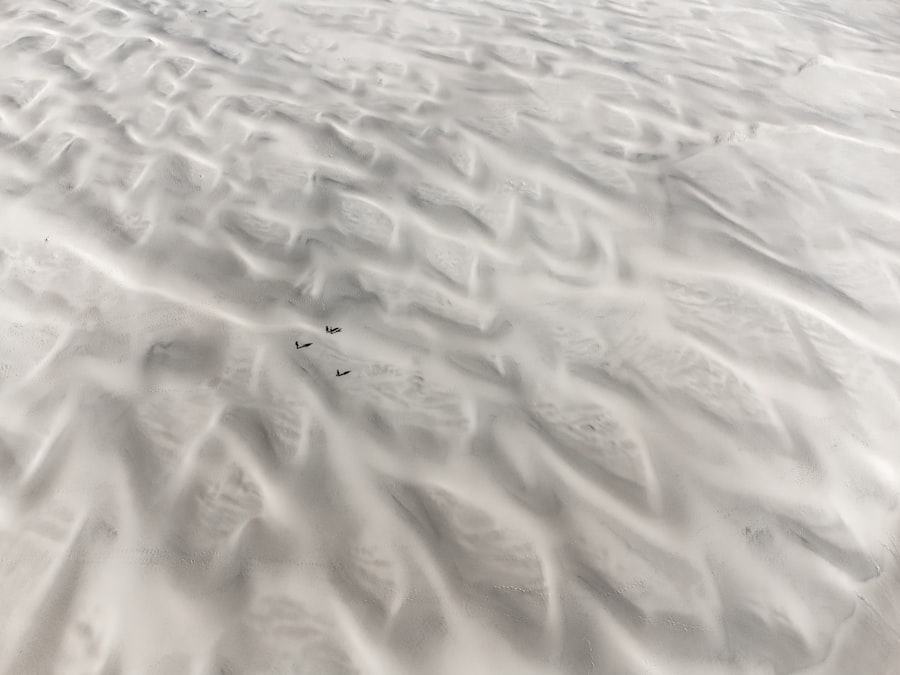
The visual transformation of White Sands during the Ice Age would have been breathtakingly alien. The familiar shimmering white of gypsum would have been muted, perhaps obscured by a delicate dusting of snow or a layer of frost. The very texture of the landscape would have been altered, with the powdery gypsum taking on the consistency of packed snow or ice.
Sculpted by Wind and Ice: The Ghostly Forms
The iconic parabolic and star dunes of White Sands are shaped by prevailing winds. During the Ice Age, these same wind patterns, amplified by the colder, denser air, would have continued their sculpting work. However, the material being moved was different. Instead of dry, loose sand, the wind was transporting frozen gypsum. This would have created dunes with a firmer, more cohesive structure, perhaps with sharper crests and more defined slopes, resembling vast drifts of snow.
The Mirror of the Sky: Frozen Surfaces Reflecting a Pale Sun
The inherent reflectivity of the gypsum would have been amplified by the presence of ice and snow. Sunlight, even during a colder epoch, would have bounced off the frozen surfaces, creating an intensely bright and almost blinding landscape. Imagine a vast expanse of shimmering white, reflecting a pale, often overcast sky, with the distant mountains perhaps capped with snow or ice. The silence would have been profound, broken only by the howling wind and the crunch of frozen gypsum underfoot.
Flora and Fauna in a Frigid Embrace: Adaptation and Survival
The flora and fauna of Ice Age White Sands would have been dramatically different from today’s inhabitants. The lush vegetation that might have once characterized the edges of the pluvial lakes would have been replaced by hardy, cold-adapted species. The animals would have been those capable of surviving harsh, frozen conditions.
Surviving the Chill: Cold-Adapted Plant Life
While direct evidence of plant life within the dunes themselves during the Ice Age is scarce, the surrounding areas would have supported vegetation adapted to colder, wetter conditions. Grasses, hardy shrubs, and perhaps even some coniferous trees might have thrived in the more temperate zones surrounding the pluvial lakes and on the mountain slopes. These plants would have provided a food source for grazing animals.
Giants of the Ice Age: Mammoths and Their Kin
The megafauna of the Pleistocene would have likely roamed the broader Tularosa Basin. Mammoths, with their thick fur and adaptations for cold climates, would have been well-suited to the environment. Other large herbivores, such as ground sloths and extinct bison species, might have also inhabited the region, grazing on the more abundant vegetation. Predators like dire wolves and saber-toothed cats would have followed these herds, completing the Ice Age food web.
The Retreat of the Ice: A Gradual Awakening

The end of the last glacial period, around 11,700 years ago, marked a profound shift in global climate. As the massive ice sheets began to melt, sea levels rose, and atmospheric circulation patterns changed once again. This led to a gradual warming and drying of the climate across much of the globe, including the southwestern United States.
The Vanishing Lakes: A Drying Landscape
The pluvial lakes that had once dominated the Tularosa Basin began to shrink. As temperatures rose and precipitation patterns shifted, the influx of water decreased, and evaporation increased. The once vast freshwater bodies gradually receded, leaving behind expansive, salt-encrusted lakebeds.
The Birth of the Modern Desert: Uncovering the Gypsum Sands
As the lakes disappeared, the fine gypsum sediment that had been deposited on their floors was exposed to the increasingly arid climate. The wind, once instrumental in shaping frozen dunes, now began to sculpt dry, powdery gypsum into the vast, shifting sands we recognize today. The process was not instantaneous but a gradual transformation over thousands of years, as the climate transitioned from a cold, wet Ice Age to the hot, dry desert of the present.
Echoes of the Past: Fossils and Geomorphology
While the frozen landscape has long since melted, the legacy of the Ice Age at White Sands is not entirely lost. Paleontological evidence, such as fossilized footprints of Ice Age animals, has been found within the park, offering direct glimpses into the life that once thrived in this region. Furthermore, the very geomorphology of the landscape, the presence of gypsum dunes and the basin-and-range topography, is a testament to the geological and climatic forces that have shaped White Sands over millennia, including its dramatic transformation into a frozen wonderland during the Ice Age. The geological record, etched into the very earth, tells a story of a world vastly different from our own, a world where the iconic White Sands were a testament to the pervasive power and surprising manifestations of the Ice Age.

These Footprints Could Rewrite the Story of the First Americans
FAQs
What is White Sands?
White Sands is a unique natural area located in New Mexico, USA, known for its vast expanse of white gypsum sand dunes.
How did White Sands form during the Ice Age?
During the last Ice Age, around 10,000 to 25,000 years ago, the area that is now White Sands was covered by a large lake. As the climate warmed and the lake dried up, the gypsum deposits left behind were eroded by wind and water, forming the distinctive white sand dunes.
What makes White Sands unique during the Ice Age?
White Sands is unique because it is the world’s largest gypsum dunefield. The gypsum sand is extremely rare and creates a stunningly white landscape that is unlike any other in the world.
What kind of Ice Age animals lived in White Sands?
During the Ice Age, White Sands was home to a variety of now-extinct megafauna, including mammoths, giant ground sloths, and saber-toothed cats. Fossilized footprints and bones of these animals have been found in the area.
How is White Sands preserved today?
White Sands National Park was established in 2019 to protect and preserve the unique natural and cultural resources of the area. The park offers opportunities for recreation, education, and scientific research, while also ensuring the long-term conservation of the white gypsum dunes.