
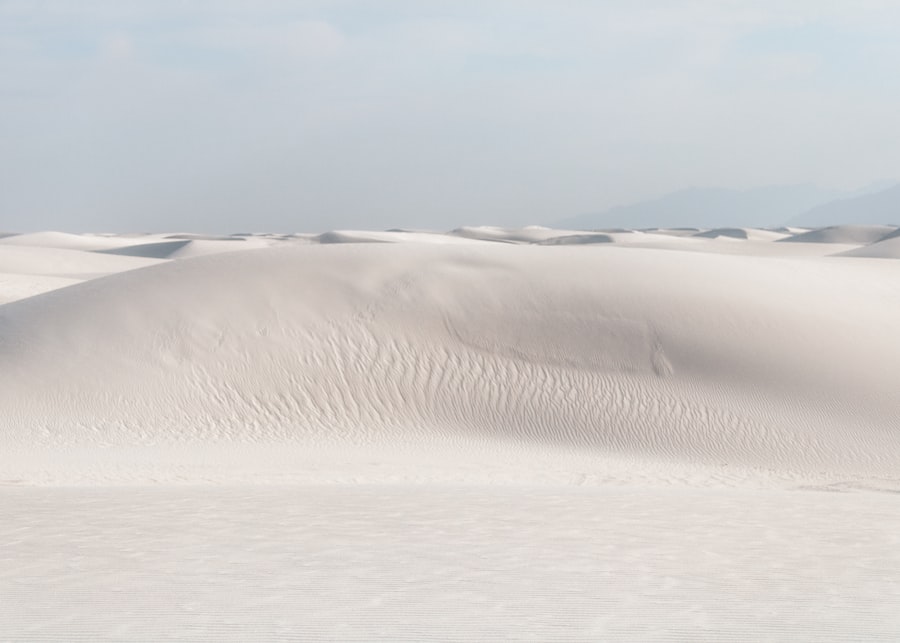
The vast, gypsum dunes of White Sands National Park in New Mexico hold a secret whispered through time: the footprints of ancient humans. For decades, these delicate impressions in the sand have captivated scientists, archaeologists, and the public alike, sparking debate and driving intensive research. What began as tantalizing glimpses of the past has, through rigorous scientific investigation, evolved into compelling evidence that challenges long-held timelines of human migration into the Americas. The White Sands footprints are not merely geological curiosities; they are tangible records of human presence, meticulously studied and analyzed to reveal crucial insights into our shared history.
The Discovery and Initial Investigations
The discovery of the White Sands footprints was not a singular event, but rather a gradual accumulation of observations. Early visitors and park rangers, accustomed to the dynamic nature of the dunes, occasionally noticed unusual impressions that didn’t quite fit the patterns of animal tracks. These peculiar shapes, often elongated and displaying distinct toe and heel features, hinted at something more. However, the ephemeral nature of the dune environment meant that such discoveries were often fleeting, washed away by the ever-shifting sands before they could be properly documented or studied.
Early Recognition of Human Origin
It wasn’t until the late 20th and early 21st centuries that a more systematic approach began. Researchers, intrigued by anecdotal reports and the potential significance of these findings, started to conduct more targeted surveys within the park. The challenge lay in finding these footprints before they were eroded and in distinguishing them from the tracks of animals that inhabit the region. Early studies, often relying on visual identification and rudimentary dating methods, began to build a case for the human origin of some of these impressions. The distinct morphology of the footprints, including the presence of arch support, heel striations, and evidence of a plantigrade gait (walking on the soles of the feet), strongly suggested human activity.
Challenges of the White Sands Environment
The very environment that preserves these footprints also presents significant challenges to scientific investigation. The gypsum dunes are constantly in motion, sculpted by wind and occasional rain. This dynamism means that footprints can be buried, eroded, or distorted within relatively short periods. Locating specific trackways, especially those that might be older, requires extensive fieldwork and often relies on serendipity. Furthermore, the friable nature of the gypsum can make it difficult to obtain clear, detailed impressions, and the decomposition of organic material within the tracks can complicate radiocarbon dating.
Recent discoveries at White Sands National Park have sparked significant interest in the scientific community, particularly regarding the ancient footprints found in the area. These footprints, believed to be over 20,000 years old, provide compelling evidence of early human presence in North America. For those interested in exploring related topics, an insightful article on the implications of international agreements on scientific collaboration can be found at Understanding the USMCA Trade Agreement. This piece highlights how trade agreements can influence research funding and international partnerships, which are crucial for advancing our understanding of archaeological findings like those at White Sands.
The Power of Dating: Unraveling the Timeline
One of the most critical aspects of studying the White Sands footprints has been their precise dating. Establishing a reliable chronology is paramount to understanding their significance and how they fit into the broader narrative of human prehistory. Early attempts at dating were often indirect, relying on associated artifacts or geological context. However, advancements in scientific dating techniques have revolutionized our understanding, providing increasingly robust timelines.
Radiocarbon Dating of Organic Material
The most groundbreaking dating of the White Sands footprints has come through the analysis of organic material found within the impressions themselves. In many instances, these footprints contain traces of ancient seeds, charcoal, or even animal waste that was deposited at the same time the footprint was made. These organic samples can then be subjected to radiocarbon dating. This method measures the decay of radioactive carbon-14, allowing scientists to determine the age of organic material.
The Significance of Fuels in the Footprints
A pivotal development in dating the White Sands footprints was the identification of specific organic materials within the tracks that could be reliably dated. Researchers identified what are colloquially referred to as “fuels” – seeds and charcoal fragments – embedded within the sediment of the footprints. These inclusions offered a direct link to the moment the footprint was made. By carefully extracting and analyzing these materials using Accelerator Mass Spectrometry (AMS) radiocarbon dating, scientists were able to achieve highly accurate age estimates for individual footprints.
Stratigraphic Evidence and Contextual Dating
Beyond direct dating of organic material within the prints, researchers also consider stratigraphic evidence. This involves analyzing the layers of sediment in which the footprints are found. The principle of superposition states that in undisturbed rock layers, the oldest layers are at the bottom and the youngest are at the top. By understanding the depositional history of the dunes and the layers above and below the footprints, scientists can corroborate and refine dating estimates. If a footprint is found beneath a layer of ash from a known volcanic eruption, for instance, it provides a lower bound for its age. Conversely, if it is found above a dated geological event, it establishes an upper bound.
Luminescence Dating of Sediments
In addition to radiocarbon dating, other techniques like luminescence dating have been employed to date the surrounding sediments. Optically Stimulated Luminescence (OSL) dating, for example, can date the last time sand grains were exposed to sunlight. By dating the sediments that directly overlie or underlie the track-bearing layers, researchers can establish a timeframe for when those layers, and thus the footprints, were deposited. While this method dates the sediment rather than the organic material within the footprint, it provides a valuable independent verification of the chronological framework.
Morphological Analysis: Identifying the Makers
The footprints themselves are a rich source of information, offering clues about the physical characteristics and behavior of the individuals who made them. Detailed morphological analysis, the study of form and structure, has been crucial in confirming their human origin and even inferring aspects of their lives.
Distinguishing Human from Animal Tracks
One of the primary objectives of morphological analysis is to unequivocally distinguish human footprints from those of animals. While some animal tracks can be elongated, human footprints typically exhibit specific features not found in most mammals.
The Plantigrade Gait
Human footprints are characterized by a plantigrade gait, meaning that the heel strikes the ground directly. Many animals, such as wolves or bears, walk on their toes (digitigrade) or on the balls of their feet. The imprint of a full heel and the distribution of pressure across the sole of the foot are clear indicators of human locomotion.
Presence of an Arch and Toe Shape
Another distinctive feature is the presence of a medial longitudinal arch in the human foot, which helps absorb shock and provide propulsion. This arch is often discernible in well-preserved footprints. Furthermore, the shape and relative length of the toes, particularly the large, non-opposable hallux (big toe), are characteristic of human feet and differ from the clawed or more splayed toes of many animals.
Evidence of Biomechanics and Behavior
Beyond simply identifying the maker, the detailed analysis of the footprints can reveal information about the biomechanics and even the behavior of the individuals who left them.
Stride Length and Pace
The distance between consecutive footprints, known as the stride length, can be used to estimate the pace and even the running speed of the individuals. Variations in stride length can suggest different gaits, such as walking or running.
Foot Size and Potential Age Estimation
The size of the footprints can provide an estimate of the foot size of the individual. While direct age determination is impossible from footprints alone, larger footprints are generally associated with adults, and smaller ones with children. In some cases, researchers have been able to infer the presence of children within groups based on the size and pattern of their tracks.
Load-Bearing and Carrying
The depth and deformation of the sediment within a footprint can sometimes indicate the weight of the individual or whether they were carrying a load. Deeper impressions might suggest a heavier individual or someone carrying a significant burden, such as a child or supplies.
The Age of the Footprints: A Paradigm Shift
The most profound impact of the White Sands footprints lies in their age. The results of the dating efforts have pushed back the known timeline of human presence in the Americas by millennia, forcing a reevaluation of established theories about the timing and routes of migration.
Revisiting the Clovis First Model
For decades, the “Clovis First” model dominated archaeological thought regarding the initial peopling of the Americas. This theory posited that the first humans arrived in North America around 13,000 years ago, as evidenced by the distinct Clovis projectile points found at archaeological sites. The White Sands footprints, with their much older dates, directly challenge this long-held paradigm.
Challenging Conventional Migration Routes
The traditional view of the Clovis migration involved a land bridge across the Bering Strait, followed by passage through an ice-free corridor that opened up between the Cordilleran and Laurentide ice sheets. The antiquity of the White Sands footprints suggests that humans may have arrived in the Americas much earlier and potentially via different routes, such as coastal migration.
Evidence for Pre-Clovis Occupation
The dating of the White Sands footprints to at least 21,000 years ago provides undeniable evidence for a human presence in North America during the Last Glacial Maximum. This period was characterized by extensive ice sheets, making passage through the northern routes extremely difficult, if not impossible.
Implications for Coastal Migration Theories
The presence of humans in White Sands at such an early date lends significant support to theories of coastal migration. These theories propose that early humans traveled down the Pacific coast of North America, potentially using boats, bypassing the inland ice sheets. The White Sands footprints, located far inland, suggest that these early populations dispersed widely and relatively quickly after their arrival.
Ongoing Debates and Future Research Directions
While the White Sands footprints have provided powerful new evidence, the scientific community continues to engage in rigorous debate and ongoing research. Questions remain about the precise routes of entry, the size and organization of these early populations, and their adaptations to the diverse environments of ancient North America. Future research will undoubtedly focus on further refining dating techniques, searching for additional fossil and archaeological evidence, and employing advanced computational modeling to reconstruct ancient landscapes and migration patterns.
Recent discoveries at White Sands National Park have sparked significant interest in the scientific community, particularly regarding the ancient footprints found in the area, which suggest human presence in North America much earlier than previously thought. For those interested in exploring how evidence from various archaeological sites can reshape our understanding of history, a related article discusses the implications of elite assets and ownership in the context of historical events. You can read more about this intriguing connection in the article here.
Environmental Context: A World Transformed
The White Sands footprints were not laid down in the arid desert we see today. They are imprinted in a landscape that was dramatically different during the Pleistocene epoch, a period of significant climate change and glacial activity. Understanding this ancient environment is crucial for interpreting the footprints and the lives of the people who made them.
The Pleistocene Environment of White Sands
During the Last Glacial Maximum, roughly 26,500 to 19,000 years ago, much of North America was covered by massive ice sheets. In contrast, areas like White Sands, while not glaciated, experienced a cooler and wetter climate than they do today. This pluvial period meant that ancient Lake Otero, a vast body of water, occupied the basin where the gypsum dunes now stand.
Ancient Lake Otero and Its Shores
The presence of a large freshwater lake would have created a much more hospitable environment for both humans and animals. The shores of Lake Otero would have provided reliable sources of water, attracted game animals, and supported plant life, making it an attractive location for early human settlements and migratory routes.
Interactions with Megafauna
The Pleistocene was also the era of megafauna, giant animals that roamed the continents. Fossil evidence suggests that mammoths, giant ground sloths, and other large herbivores would have inhabited the areas around ancient lakes like Otero. The White Sands footprints sometimes show evidence of interaction with these animals, such as tracks made in close proximity to or even overlapping with the prints of megafauna.
Climate Change and Paleoenvironmental Reconstruction
Paleoenvironmental reconstruction is a vital scientific discipline that seeks to understand past climates and environments. By studying sediment cores, ice cores, pollen records, and fossil assemblages, scientists can build a picture of what the White Sands region was like thousands of years ago.
Pollen Analysis and Vegetation Shifts
Pollen analysis, the study of fossilized pollen grains, can reveal changes in vegetation over time. The types of pollen found in sediment layers can indicate whether the area was dominated by grasses, trees, or shrubs, reflecting shifts in rainfall and temperature.
Isotopic Analysis of Sediments
Isotopic analysis of water and mineral samples can provide further clues about past precipitation patterns, temperatures, and the salinity of ancient water bodies. These analyses help to paint a more complete picture of the hydrological cycle and climate of the Pleistocene White Sands. The White Sands footprints, therefore, are not isolated artifacts but are inextricably linked to the dynamic paleoenvironmental conditions of their time. They offer a rare window into a world that has long since vanished, yet whose echoes are preserved in the gypsum sands.

These Footprints Could Rewrite the Story of the First Americans
FAQs
What is the scientific evidence for White Sands footprints?
The scientific evidence for White Sands footprints comes from the study of fossilized human footprints found in the White Sands National Park in New Mexico. These footprints have been dated to over 20,000 years ago, making them some of the oldest known human footprints in North America.
How were the footprints preserved?
The footprints were preserved due to the unique environmental conditions at White Sands. The area was once a large lake, and the footprints were made in wet clay. Over time, the clay dried and hardened, preserving the footprints for thousands of years.
What do the footprints tell us about early human migration?
The footprints provide evidence of early human presence in North America, supporting the theory that humans migrated to the continent much earlier than previously thought. The discovery of these footprints challenges previous assumptions about the timeline of human migration into the Americas.
What techniques were used to study the footprints?
Scientists used a combination of radiocarbon dating, sediment analysis, and 3D scanning technology to study the footprints. These techniques helped researchers determine the age of the footprints, the environmental conditions at the time they were made, and the size and gait of the individuals who made them.
Why are the White Sands footprints significant?
The White Sands footprints are significant because they provide tangible evidence of early human presence in North America. This discovery has the potential to reshape our understanding of human migration and settlement in the Americas, and it highlights the importance of preserving and studying archaeological sites.