Whispers from the Desert Sands: Unearthing the Ancient Arabian Horse
The stark, windswept landscapes of the Arabian Peninsula hold a deep and enigmatic past, etched into the very rock formations by the hands of ancient peoples. Among the most compelling and frequently depicted subjects in these age-old petroglyphs are the horses, particularly those that roamed and were revered in ancient Arabia. These stone carvings, found scattered across vast tracts of desert, offer a unique window into the relationship between early Arabian societies and these magnificent creatures, a relationship that was deeply intertwined with their culture, economy, and spiritual beliefs. Recent discoveries and ongoing research continue to shed light on the significance of these wild equines, revealing not just their presence but their central role in the lives of those who once traversed these unforgiving terrains.
The sheer volume and intricate detail of horse depictions in Arabian petroglyphs are striking. They are not mere fleeting sketches but often powerful representations, conveying a sense of movement, power, and vitality. Researchers are increasingly employing advanced analytical techniques, from high-resolution photography and digital enhancement to GIS mapping and detailed stylistic analysis, to decipher the stories these ancient artists sought to tell. This article delves into the revelations offered by these ancient rock carvings, exploring the types of horses depicted, the contexts in which they appear, and what these silent testimonies tell us about the wild horses of ancient Arabia and the people who etched their likenesses into eternity.
Wild horses have long been a symbol of freedom and strength, and their depiction in Arabian petroglyphs offers a fascinating glimpse into the cultural significance of these majestic creatures in ancient societies. For those interested in exploring the intersection of history and mythology, a related article delves into the mysteries of ancient technology and knowledge, shedding light on how such insights could have influenced the understanding of wildlife, including wild horses. To learn more about these intriguing connections, you can read the article here: Forbidden Ancient Technology: Secrets Unearthed.
Echoes of the Equine Past: The Significance of Horse Depictions
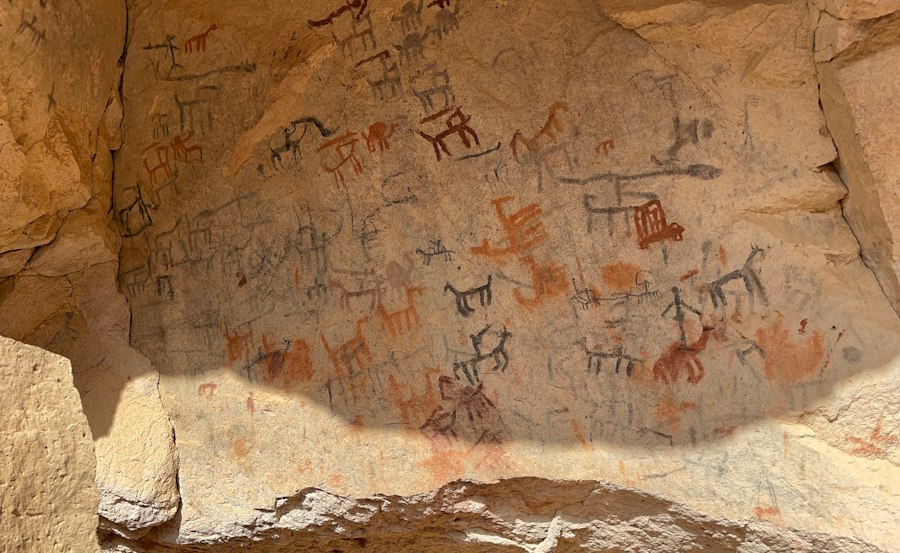
The prevalence of horse imagery in Arabian petroglyphs is not accidental. The horse, whether wild or domesticated, was a creature of immense importance in the ancient Arabian world. Its speed and endurance were essential for hunting, warfare, and long-distance travel across the vast and often challenging desert. Beyond its practical utility, the horse also held symbolic and spiritual significance, representing power, freedom, and a connection to the divine. The act of carving these animals into rock, a permanent medium, suggests a profound respect and a desire to imbue these qualities into the landscape itself, perhaps as a form of veneration or as a way to ensure their continued presence and favor.
The earliest petroglyphs are often characterized by a more rudimentary style, yet even in these early forms, the essence of the horse is captured with remarkable skill. As time progressed, artistic styles evolved, leading to more detailed and dynamic representations. The careful observation of the artists is evident in their depictions of equine anatomy, musculature, and even subtle behavioral cues. These carvings are not simply decorative; they are narrative, offering glimpses into the daily lives, beliefs, and the very spirit of the societies that created them. The sheer number of horse motifs across different archaeological sites suggests a widespread appreciation and perhaps even a shared cultural understanding of the horse’s place in the world.
Identifying the Depicted Equines: More Than Just Horses
Distinguishing between wild and domesticated horses, and even identifying specific breeds or types, within petroglyphs can be a challenging but rewarding endeavor. While some depictions are undeniably of the modern Arabian horse’s ancestors, others may represent different equine species or variations that have since become extinct or evolved significantly. Careful analysis of anatomical features such as skull shape, leg proportions, and tail carriage can provide clues. Furthermore, the context in which the horses are depicted – whether in hunting scenes, processions, or alongside other animals – can offer insights into their role and potential classification.
The Arabian Peninsula, given its historical role as a crossroads of trade and migration, may have been home to a diverse range of equine populations over millennia. Some scholars propose that certain petroglyphs might depict early forms of wild asses or even primitive horses that predated the widespread domestication of the species as we know it today. The distinctive convex profile and refined build often associated with the modern Arabian breed are frequently visible in later carvings, suggesting a long and unbroken lineage of selective breeding or natural adaptation to the harsh desert environment. The pursuit of identifying these ancient equines is a continuous process, requiring interdisciplinary collaboration between archaeologists, zoologists, and art historians.
Contextual Clues: Unraveling the Narrative Within the Stone
The meaning and significance of horse petroglyphs are further illuminated by examining the scenes in which they appear. Are they shown in isolation, emphasizing their majestic form? Are they part of dynamic hunting sequences, highlighting their speed and the skill of the hunters? Are they depicted in more static, perhaps ritualistic, settings? These contextual clues provide vital information about the horse’s role in the lives of ancient Arabians, whether as prey, a partner in hunting, a symbol of power and status, or a spiritual entity.
Scenes of hunting are particularly common and offer a dramatic portrayal of the horse’s prowess. The depictions often show hunters on foot or sometimes on other animals, skillfully pursuing or interacting with herds of horses. The dynamism of these carvings, with flying manes and galloping legs, speaks volumes about the perceived speed and agility of these animals. In other instances, horses are shown in what appear to be processions or gatherings, suggesting their importance in social rituals or as markers of wealth and prestige. The presence of riders, when depicted, provides direct evidence of domestication and the development of horsemanship, a skill that would have been transformative for ancient Arabian societies. The careful study of these narrative scenes allows us to reconstruct not just the image of the horse but also its lived experience within these ancient communities.
Stylistic Evolution: From Rudimentary Forms to Expressive Artistry
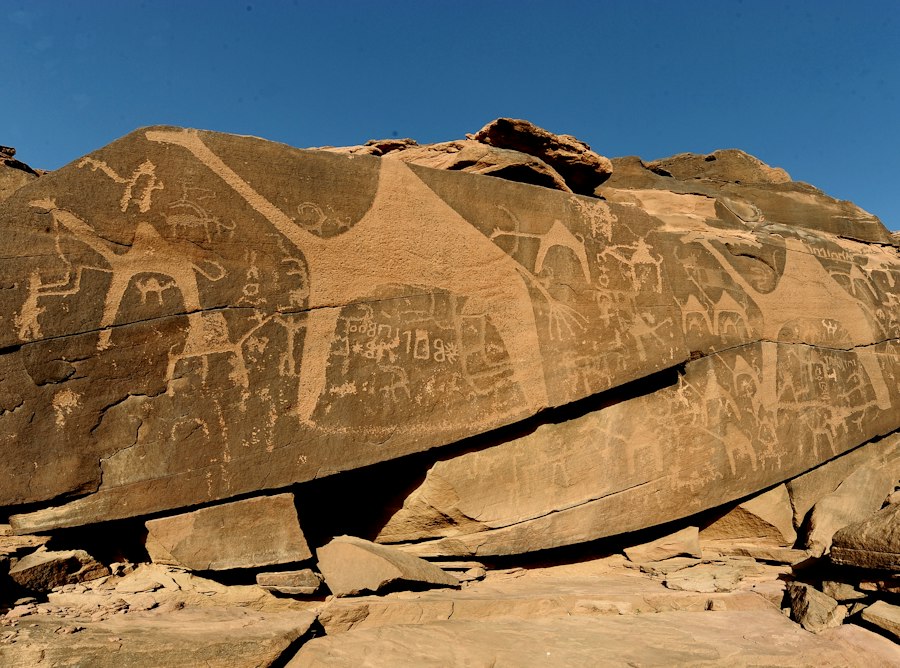
The artistic styles employed in depicting horses in Arabian petroglyphs have evolved significantly over time, mirroring broader trends in human artistic expression. Early carvings are often characterized by their simplicity and focus on capturing the essential form of the animal. These can be abstract, with broad strokes and minimal detail, yet they possess a raw power and immediacy that is captivating. As millennia passed, the artists’ skills and understanding of their subject matter deepened, leading to more sophisticated and nuanced representations.
The transition from simpler forms to more detailed and lifelike depictions is a testament to the artists’ keen observation and developing techniques. Later petroglyphs often showcase a remarkable understanding of equine anatomy, with carefully rendered musculature, flowing manes and tails, and accurate proportions. The dynamism and movement captured in these later works are particularly impressive, conveying a sense of energy and vitality that seems to leap from the stone. This stylistic evolution not only reflects artistic progress but also the growing importance and familiarity with horses in ancient Arabian life, allowing artists to translate a deeper understanding and appreciation into their work.
Early Expressions: The Raw Power of Ancient Lines
The earliest horse petroglyphs often display a distinct rawness and simplicity. These carvings, predating the refined artistic traditions of later periods, prioritize the essential outline and spirit of the animal. They are characterized by bold, sweeping lines, a focus on core anatomical features, and a certain abstract quality. Despite their apparent lack of intricate detail, these early works possess a powerful immediacy, conveying the primal essence of the horse as a force of nature.
These rudimentary depictions are often found in conjunction with other early rock art, such as depictions of ibex, camels, and human figures. Their presence suggests that the horse, in some form, was an integral part of the ancient Arabian landscape and the lives of its earliest inhabitants. The artists of this era likely possessed a profound connection to the natural world, and their carvings served as a way to capture and commemorate the animals they encountered. The very act of etching these forms into the durable rock face speaks to a desire to preserve a connection with these creatures, perhaps as a form of totemic representation or as a narrative of their place in the environment.
The Refinement of Form: Capturing the Spirit and Grace
As Arabian societies developed and interacted with their environment, the artistic rendering of horses began to show a marked increase in sophistication. This period saw the emergence of petroglyphs that are not only anatomically accurate but also imbued with a palpable sense of grace and dynamism. The artists demonstrated a keen eye for detail, capturing the subtle curves of the horse’s body, the flow of its mane and tail, and the powerful musculature that defined its speed and endurance.
These more refined depictions often appear in scenes that suggest a deeper understanding of equine behavior and a more established relationship with these animals. Whether illustrating a spirited gallop, a moment of repose, or an interaction between horses, the artists conveyed a remarkable expressiveness. The convexity of the profile, the slender legs, and the refined head shape that would come to characterize the Arabian horse are increasingly evident in these later carvings. This artistic maturation reflects not only advancements in carving techniques but also a growing cultural appreciation for the horse, potentially linked to the development of breeding programs and the refinement of horsemanship. The ability to so vividly capture the spirit and grace of the horse in stone is a testament to the artistic skill and profound connection these ancient peoples had with these noble creatures.
The Arabian Horse: A Symbol of Endurance and Adaptation
The Arabian horse, celebrated worldwide for its beauty, intelligence, and stamina, has its roots deeply embedded in the history and culture of the Arabian Peninsula. The petroglyphs offer compelling evidence that these characteristics were recognized and valued by ancient peoples for millennia. The depictions often emphasize the horse’s ability to thrive in the harsh desert environment, a testament to its remarkable adaptability and resilience. The endurance and speed required to traverse vast distances over unforgiving terrain were not merely practical assets but also qualities that likely contributed to the horse’s symbolic status.
The long, lean limbs, refined head, and energetic posture frequently depicted in the petroglyphs align with the distinct physical attributes of the Arabian breed. These animals were not only crucial for survival in a challenging landscape but also became intertwined with the identity and aspirations of the people who lived there. The rock carvings serve as enduring testaments to this deep-seated connection, preserving the image of a creature that embodied the spirit of the desert: hardy, swift, and untamed.
Desert Dwellers: Adaptations Etched in Stone
The arid and often unforgiving environment of the Arabian Peninsula demanded animals of exceptional resilience and endurance. The petroglyphs provide visual proof that the horses depicted possessed these very qualities. Artists meticulously rendered anatomical features that facilitated survival in the desert, such as lean musculature for efficient movement over long distances and a build suited for conserving energy in extreme temperatures. The depictions often convey a sense of lightness and agility, essential for navigating sandy terrains and rocky outcrops.
The recurring imagery of horses in vast, open desert landscapes suggests their integral role in the nomadic lifestyles of ancient Arabians. Their ability to cover great distances would have been vital for hunting, trade, and migration. The petroglyphs serve as visual archives of these hardy equines, showcasing their inherent adaptations that allowed them to thrive where other animals might falter. The careful study of these physical attributes within the carvings allows us to infer the selective pressures that shaped these animals and the deep understanding ancient peoples had of their capabilities.
The Genesis of a Legend: From Wild Stock to Cultivated Beauty
The Arabian horse, as we recognize it today, is the product of millennia of interaction between humans and equines in the Arabian Peninsula. The petroglyphs offer tantalizing glimpses into the evolutionary journey of this legendary breed, suggesting a long history of selective breeding or natural selection favoring specific traits. The recurring depictions of horses with convex profiles, refined heads, and spirited gaits point towards the emergence of the distinctive Arabian type.
While some carvings may represent wild ancestral forms, others clearly depict animals that have been influenced by human intervention. The presence of riders in some petroglyphs directly indicates domestication and the development of horsemanship. Over time, these interactions likely led to the deliberate cultivation of horses with desired characteristics such as speed, stamina, temperament, and beauty, laying the foundation for the breed that would later captivate the world. The petroglyphs, therefore, do not just show horses; they tell a story of the gradual domestication and refinement of a remarkable animal, a legend in the making, etched into the very fabric of the Arabian land.
The depiction of wild horses in Arabian petroglyphs offers a fascinating glimpse into the ancient cultures that once thrived in the region. These rock carvings not only highlight the significance of horses in the daily lives of early inhabitants but also reflect their deep connection to the natural world. For those interested in exploring how historical artifacts can inform our understanding of contemporary issues, a related article discusses the implications of government-controlled assets and their impact on cultural heritage. You can read more about this intriguing topic here.
Beyond Art: The Cultural and Spiritual Significance of the Horse
| Metric | Value | Description |
|---|---|---|
| Number of Petroglyph Sites | 150+ | Estimated number of sites in the Arabian Peninsula featuring wild horse depictions |
| Estimated Age | 5,000 – 8,000 years | Approximate age range of petroglyphs depicting wild horses |
| Common Themes | Hunting scenes, wild horse herds, symbolic motifs | Typical subjects involving wild horses in the petroglyphs |
| Average Size of Horse Figures | 15 – 30 cm | Typical height range of horse figures carved in the rock |
| Geographical Distribution | Northwest Arabia, Nejd, Hail regions | Primary areas where wild horse petroglyphs are found |
| Number of Distinct Horse Depictions | Over 500 | Count of individual wild horse images documented in major sites |
| Associated Fauna | Camels, ibex, gazelles | Other animals commonly depicted alongside wild horses |
The depictions of horses in Arabian petroglyphs extend far beyond mere artistic representation; they are imbued with profound cultural and spiritual significance. The horse was not simply an animal but a potent symbol of power, freedom, nobility, and perhaps even divinity. The act of carving these creatures into stone suggests a deep reverence and a desire to connect with the spiritual essence that these animals represented. These silent testimonies offer insights into the belief systems and worldview of ancient Arabian societies.
The frequency and prominence of horse imagery in archaeological sites across the peninsula underscore its central role in the collective consciousness of these ancient peoples. Whether as a totem, a deity, a mediator between the earthly and spiritual realms, or a representation of cosmic forces, the horse held a place of immense importance. The ongoing analysis of these petroglyphs continues to unravel the complex tapestry of cultural and spiritual beliefs woven around this majestic creature.
Symbols of Power and Prestige: The Horse in Social Hierarchy
In many ancient societies, the possession of horses was synonymous with wealth, status, and power. The Arabian Peninsula was no exception. The petroglyphs, by depicting horses in various contexts, offer clues about their role in the social hierarchy of ancient Arabian communities. The presence of elaborate saddle designs or adornments on some horse depictions, or the association of horses with figures of authority, can suggest their importance as symbols of prestige and social standing.
The speed and agility of horses also made them invaluable in warfare and raiding, activities that were often integral to the socio-political landscape of the region. Depictions of horses in action, particularly in conjunction with human figures, can therefore be interpreted as representations of military prowess and the power wielded by those who controlled these formidable animals. The horse, in essence, became a tangible manifestation of authority and dominance, its image etched into the landscape as a perpetual reminder of its significance.
Spiritual Connections: The Horse as Mediator and Divine Messenger
The relationship between ancient humans and animals often transcended the utilitarian, extending into the realm of the spiritual and the sacred. The horse, with its majestic bearing and untamed spirit, was a natural candidate for such reverence. Some scholars propose that horse petroglyphs may have served a spiritual or ritualistic purpose, acting as intermediaries between the earthly and the divine. The act of carving could have been a form of prayer, supplication, or an attempt to invoke the power and spirit of the horse.
Certain depictions might represent deities, ancestral spirits, or celestial beings associated with horses. The dynamism and energetic nature of the carvings could be interpreted as a representation of cosmic forces or the wild, untamed spirit of nature. The widespread presence of horse imagery across diverse cultural groups in the Arabian Peninsula suggests a shared pantheon of beliefs or a common reverence for the animal’s perceived connection to the spiritual realm. These petroglyphs, therefore, offer a window into the complex animistic beliefs and spiritual practices of ancient Arabian peoples, where the horse played a vital role in their understanding of the universe and their place within it.

Why Were Giant Camels Carved Above the Desert?
FAQs
What is the significance of wild horses in Arabian petroglyphs?
Wild horses depicted in Arabian petroglyphs are believed to symbolize strength, freedom, and the importance of these animals in the daily lives of ancient Arabian cultures.
Where are these Arabian petroglyphs featuring wild horses typically found?
Arabian petroglyphs featuring wild horses are commonly found in rocky areas, such as mountains, cliffs, and caves, throughout the Arabian Peninsula.
What time period do these petroglyphs of wild horses date back to?
These petroglyphs of wild horses in Arabia are estimated to date back to various time periods, ranging from thousands to hundreds of years ago, providing valuable insights into the region’s ancient history.
How were these petroglyphs of wild horses created?
These petroglyphs of wild horses were typically created by ancient Arabian cultures using primitive tools to carve or engrave images of horses onto the surface of rocks, leaving behind enduring artistic expressions.
What do researchers and archaeologists learn from studying wild horses in Arabian petroglyphs?
Studying wild horses in Arabian petroglyphs allows researchers and archaeologists to gain insights into the cultural practices, beliefs, and relationships with nature of ancient Arabian societies, shedding light on their way of life and artistic expressions.