
Kennewick Man: Unraveling the Identity Controversy
The discovery of a remarkably well-preserved human skeleton on the banks of the Columbia River in 1996 ignited a firestorm of scientific and cultural debate that would captivate the world. Dubbed “Kennewick Man” by the media, this ancient individual, whose remains were unearthed by accident during a drought, presented a profound puzzle to scientists and Indigenous peoples alike. His skeletal features defied easy categorization, challenging existing theories about the peopling of the Americas and sparking a complex legal battle over his rightful heritage and scientific study. The controversy surrounding Kennewick Man was not merely an academic exercise; it touched upon deep-seated beliefs about ancestry, ownership of the past, and the very definition of what it means to be human.
A Dry Spell Reveals a Prehistoric Enigma
The summer of 1996 brought an unusually dry spell to the Pacific Northwest, causing the Columbia River to recede to its lowest levels in decades. This environmental shift had an unexpected consequence: it exposed a section of the riverbank near Kennewick, Washington, revealing a cache of human remains. Two college students, David T. Hooper and Steve Takash, were exploring the area when they stumbled upon a human skull. Their initial discovery soon led to the uncovering of a significant portion of a skeleton.
Preliminary Examination and Scientific Intrigue
The unearthed remains were quickly reported to local authorities. As more bones were recovered, it became apparent that this was no recent burial. Anthropologists were called in, and preliminary examinations revealed a skeleton of remarkable antiquity and unusual morphology. The bones were dated using radiocarbon methods to approximately 9,000 years old, placing him squarely in the early Holocene epoch. This age alone made the discovery significant, as human remains from this period in North America are relatively rare.
The Unforeseen Morphological Quandary
What truly set Kennewick Man apart, however, were his physical characteristics. Initial assessments by forensic anthropologists highlighted a suite of traits that seemed anomalous. His skull shape, particularly the narrowness of the cranium and the distinct projection of the jaw, led some to believe he might not be ancestral to modern Native American populations. These observations sparked immediate scientific interest, hinting at the possibility of a previously unknown migration or distinct ancient population in the Americas. The skeleton displayed features that some experts argued bore a resemblance to the Ainu people of Japan or other populations of Northeast Asia, rather than the expected lineage of North American Indigenous groups. This perceived disconnect between his physical appearance and his purported age and location in North America was the genesis of the ensuing controversy.
The Kennewick Man identity controversy has sparked significant debate regarding the origins and rights of ancient remains found in North America. This discussion parallels broader themes of cultural heritage and identity, which can also be seen in the context of modern manufacturing and globalization. For an insightful exploration of how contemporary issues intersect with cultural identity, you can read the article on Mexico’s rising role as a manufacturing hub at this link.
The Clash of Cultures: Science Versus Heritage
The Legal Battle for Kennewick Man
The discovery of Kennewick Man quickly escalated from a scientific curiosity to a contentious legal and ethical battleground. Under the Native American Graves Protection and Repatriation Act (NAGPRA) of 1990, human remains that are identified as Native American and are more than 75 years old are subject to repatriation to affiliated tribes. The Umatilla, Walla Walla, Nez Perce, and other local tribes asserted their ancestral claims to the remains, viewing Kennewick Man as one of their own, an ancestor whose sacred burial should be respected and returned for reburial according to their traditions.
Scientific Assertions and the Challenge to NAGPRA
However, a coalition of scientists, led by anthropologists and archaeologists, argued vociferously against immediate repatriation. They contended that the skeletal features of Kennewick Man were not definitively Native American, and that his remains represented a crucial opportunity to understand the earliest inhabitants of the Americas. They believed that scientific study was essential to unraveling the mysteries of ancient migration patterns and human evolution. The scientists argued that if Kennewick Man was not demonstrably of Native American ancestry, then NAGPRA, which is specifically designed to protect Indigenous remains, might not apply. This created a direct conflict between the legal protections afforded to Indigenous heritage and the scientific imperative to study human history.
The “Oldest American” Claim and its Implications
The scientific community’s insistence on further study was fueled by the potential to re-evaluate existing models of how and when humans first populated the Americas. If Kennewick Man indeed belonged to a distinct, non-Native American lineage, it could suggest an earlier or more complex pattern of migration than previously understood. This possibility, the prospect of the “Oldest American” being something other than what was expected, became a powerful motivator for the researchers. The debate became a proxy for larger questions about who has the right to define and interpret the past, and whether scientific inquiry should sometimes supersede cultural claims, especially when those claims are based on uncertain biological ancestry.
Unraveling the Ancestry: Scientific Investigations
Advanced Techniques in Skeletal Analysis
To resolve the conflicting claims, extensive scientific investigations were undertaken. Sophisticated techniques, including detailed morphological analysis, CT scans, and ultimately, ancient DNA (aDNA) extraction and sequencing, were employed. The initial morphological assessments, while intriguing, were limited by the technology available at the time and the inherent subjectivity of some interpretations.
The Promise and Perils of Ancient DNA
The hope was that aDNA analysis would provide definitive answers about Kennewick Man’s genetic lineage. This field, while powerful, is fraught with challenges, particularly with ancient samples that are often degraded and contaminated. The process involves meticulous extraction of DNA from bone fragments, amplification of specific genetic markers, and comparison with databases of modern and ancient human populations. The potential for contamination from the researchers themselves or from other ancient remains also posed significant hurdles.
Decades of Scientific Scrutiny and Shifting Conclusions
Over the years, multiple studies were conducted, each generating new data and sometimes conflicting interpretations. Early aDNA studies, though limited, suggested a link to modern Native American populations. However, the fragmented nature of the DNA and the limitations of the techniques meant that these conclusions were not universally accepted. Further, more advanced analyses continued to refine the picture. The scientific consensus gradually shifted, with numerous studies converging on the conclusion that Kennewick Man was indeed genetically related to modern Native American populations, despite his unusual skull morphology. This was a significant vindication for the tribes and a reorientation of the scientific understanding of ancient North Americans.
Beyond Morphology: Understanding Biological Diversity
The Limitations of Cranial Features
The initial reliance on cranial morphology for determining ancestry proved to be a significant point of contention. Experts pointed out that while skull shape can be indicative of population groups, it is not an infallible marker, especially for ancient individuals whose evolutionary pathways may not perfectly align with modern classifications. Environmental factors, diet, and genetic drift can all influence skeletal development, leading to variations that do not necessarily reflect deep ancestral divisions.
The Importance of a Holistic Approach
The Kennewick Man case underscored the necessity of a holistic approach to understanding human ancestry. Relying solely on one type of evidence, such as cranial shape, can lead to incomplete or inaccurate conclusions. A comprehensive analysis requires integrating data from genetics, archaeology, linguistics, and comparative anatomy to build a more robust picture of human origins and migration. The scientific community learned that simply looking at the outside didn’t always tell the whole story, and that the internal biological blueprint held crucial clues.
Reconciling Morphology with Genetics
The eventual genetic findings provided a crucial bridge between the seemingly contradictory evidence. While Kennewick Man’s skull may have exhibited traits that differed from many modern Indigenous populations, his genetic makeup confirmed a shared ancestry. This highlighted that biological diversity existed even within ancient populations, and that evolution can lead to variations in physical traits that do not erase underlying genetic connections. The scientific understanding moved beyond a simplistic view of distinct, monolithic groups to a more nuanced appreciation of population dynamics and the complexities of human evolution.
The Kennewick Man identity controversy has sparked significant debate among scientists, Indigenous groups, and the public regarding the origins and cultural significance of this ancient skeleton. This ongoing discussion is reminiscent of other archaeological discoveries that challenge our understanding of history, such as the recent findings discussed in an article about lost technologies. For more insights into how these discoveries can reshape our perception of the past, you can read the article here.
Legacy and Reconciliation: A New Dawn for Kennewick Man
| Aspect | Details |
|---|---|
| Discovery Year | 1996 |
| Location Found | Columbia River near Kennewick, Washington, USA |
| Estimated Age of Remains | Approximately 9,000 years old |
| Initial Controversy | Dispute over whether remains were Native American or of different ancestry |
| Legal Disputes | Multiple court cases regarding repatriation under NAGPRA (Native American Graves Protection and Repatriation Act) |
| Scientific Analysis | DNA testing indicated close relation to modern Native American tribes |
| Tribal Involvement | Columbia Basin tribes claimed cultural affiliation and requested repatriation |
| Outcome | Remains returned to tribes in 2017 for reburial |
| Significance | Highlighted tensions between scientific research and indigenous rights |
The Reburial and the End of an Era
After years of legal battles and scientific investigations, a landmark decision was reached. Kennewick Man was ultimately determined to be Native American, and the Umatilla tribe was granted permission to rebury him. In 2017, after more than two decades of being held in scientific institutions, Kennewick Man was finally laid to rest on tribal land, marking the end of a profound and often painful chapter. The reburial was a deeply spiritual and culturally significant event for the Indigenous peoples, signifying the return of an ancestor to his rightful resting place.
A Model for Future Collaboration and Respect
The Kennewick Man controversy, despite its contentious beginnings, ultimately paved the way for a more collaborative and respectful relationship between scientists and Indigenous communities. The prolonged debate forced a re-evaluation of NAGPRA and its application, leading to a greater understanding of the sensitivities and rights of Native American tribes regarding their ancestral remains. The case served as a powerful lesson in the importance of intertribural consultation and the integration of Indigenous knowledge and perspectives into scientific research.
Unveiling the Past, Honoring the Future
The story of Kennewick Man is a testament to the enduring power of human curiosity and the complex tapestry of human history. His discovery not only advanced our scientific understanding of ancient North America but also fostered a greater appreciation for the cultural heritage and inherent rights of Indigenous peoples. The unraveling of his identity controversy has left an indelible mark, reminding us that the past is not a static entity to be dissected solely by science, but a living legacy that demands respect, understanding, and the honoring of all its inheritors. The quiet repose of Kennewick Man on tribal land signifies a hard-won reconciliation and a new dawn for how we approach the study of human origins, ensuring that scientific endeavor is conducted with cultural sensitivity and a deep respect for the ancestral connections that bind us all.
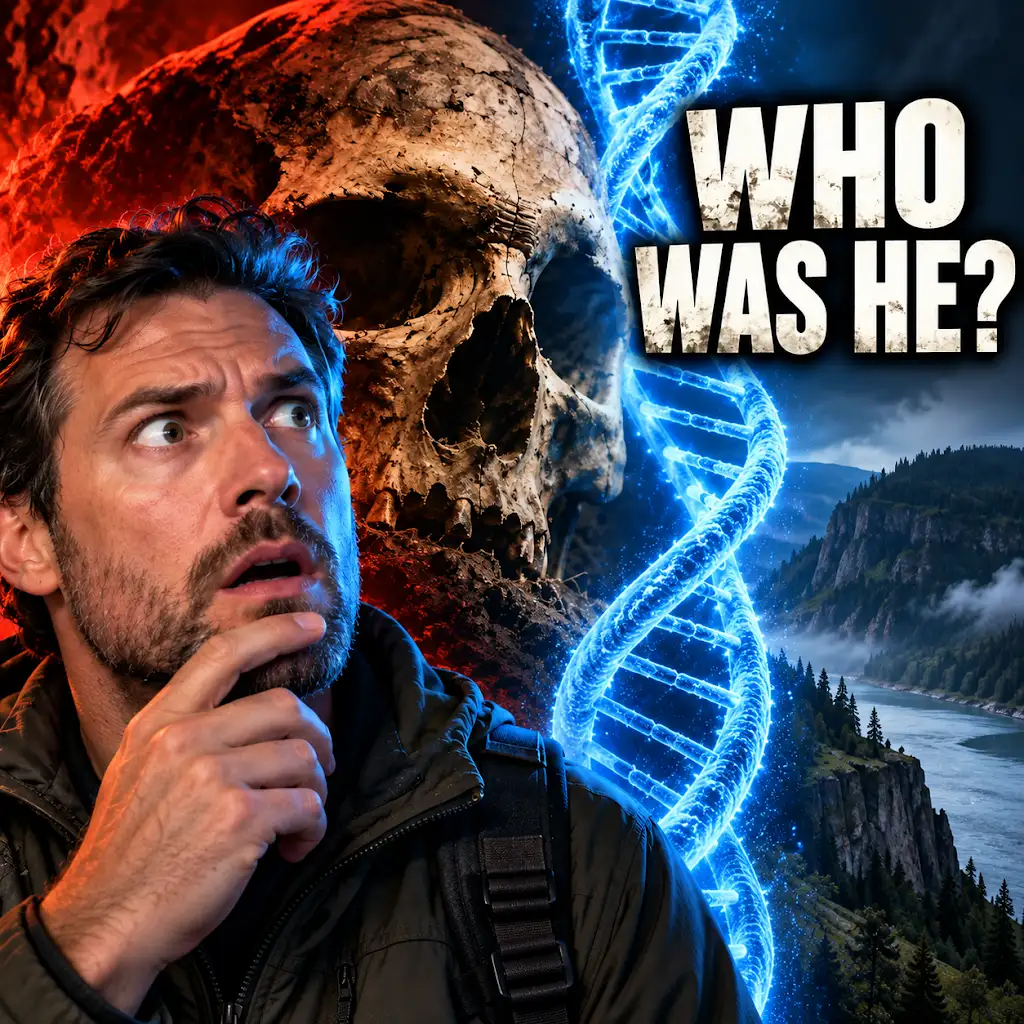
Kennewick Man’s Skull Said One Thing. DNA Said Another.
FAQs
What is the Kennewick Man identity controversy?
The Kennewick Man identity controversy refers to the debate surrounding the skeletal remains of a prehistoric man found in Kennewick, Washington in 1996. The controversy revolves around the ancestry and cultural affiliation of the remains.
How old are the Kennewick Man remains?
The Kennewick Man remains are estimated to be approximately 8,500 years old, dating back to the early Holocene period.
What is the significance of the Kennewick Man discovery?
The discovery of the Kennewick Man remains is significant because they provide valuable insights into the early human history of North America and have sparked debates about the peopling of the Americas.
What are the different theories about the ancestry of Kennewick Man?
There are various theories about the ancestry of Kennewick Man, with some scientists suggesting he may have ancestral ties to Native American tribes, while others argue that he has more affinity with ancient populations from other parts of the world.
What is the current status of the Kennewick Man remains?
After years of legal battles and scientific studies, the Kennewick Man remains were eventually reburied in 2017 by several Native American tribes who claimed cultural affiliation with the ancient individual.